Chesterton’s Fence
Ask why before deciding to take the fence down.
If you’d like these posts delivered directly to you, subscribe to the Decisions newsletter now!
I recently came across an interview between Jon Lovett of Pod Save America and author Michael Lewis – famous for Moneyball and The Big Short and who has a new book out called Blockers – here’s the link from that interview. [1]
At one point, they get into a concept called Chesterton’s Fence – here’s the short clip to that portion [2] - and I think it’s worth talking about.
If you haven’t run into it, the idea comes from English author G.K. Chesterton in his 1929 book The Thing. He talks about reform – which seems relevant both in public policy and in industry. Here’s how he describes it: [3]
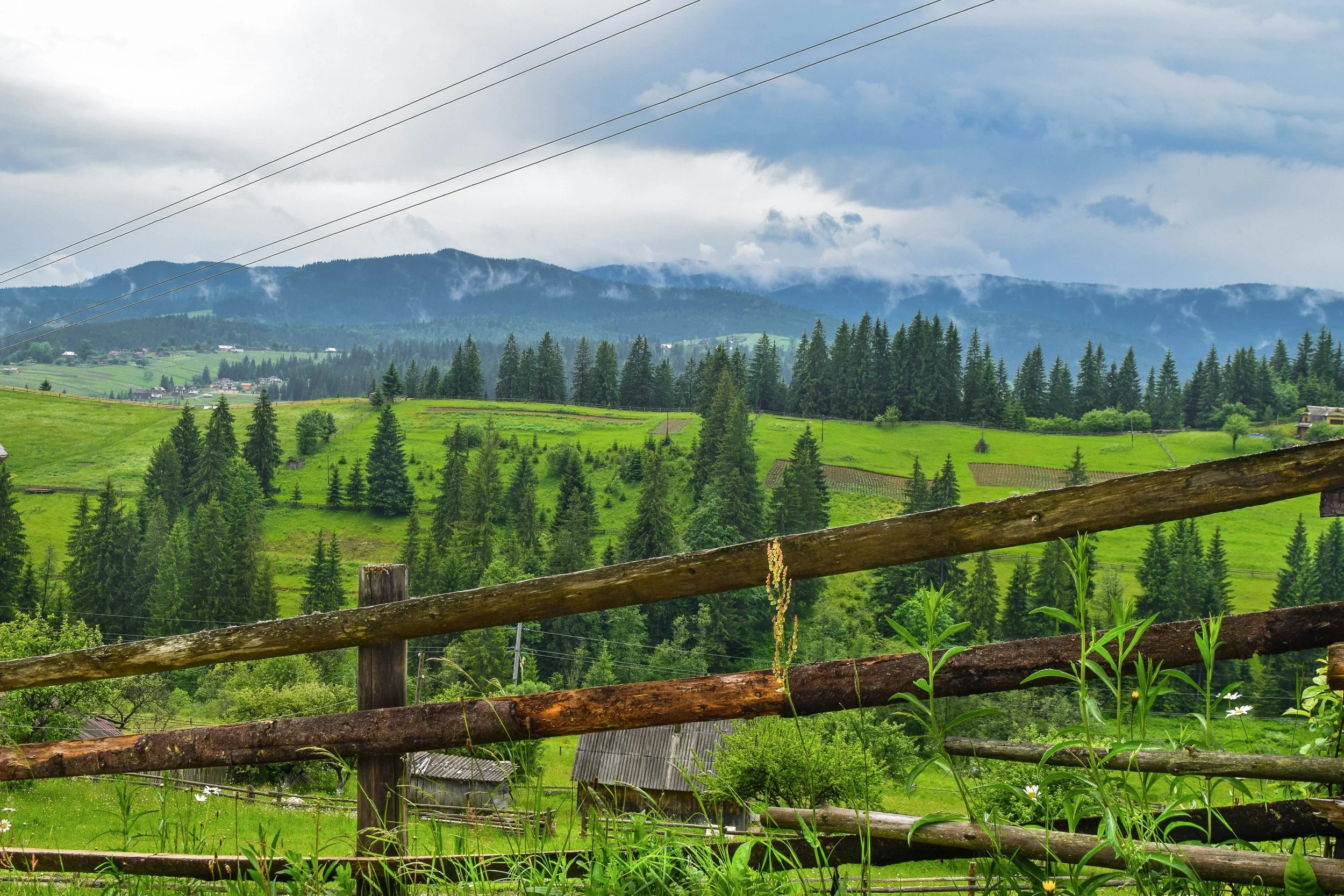
In the matter of reforming things, as distinct from deforming them, there is one plain and simple principle; a principle which will probably be called a paradox. There exists in such a case a certain institution or law; let us say, for the sake of simplicity, a fence or gate erected across a road. The more modern type of reformer goes gaily up to it and says, “I don’t see the use of this; let us clear it away.” To which the more intelligent type of reformer will do well to answer: “If you don’t see the use of it, I certainly won’t let you clear it away. Go away and think. Then, when you can come back and tell me that you do see the use of it, I may allow you to destroy it.
That’s a lot of words, but the more concise version can be said as: [4]
“Do not remove a fence until you know why it was put up in the first place.”
This doesn’t say that we shouldn’t take down fences, such as eliminating public policy rules that were put in place decades ago. What it does say: think before you just decide to scrap the rule.
Maybe the rule was a bad one – say, based on bigotry or self-interest – in that case, it’s worth the effort to take it down.
Maybe it’s just a crude rule, one where we know much more on how to do things better – serving the rule’s purpose without as much collateral damage.
Or…
Maybe the rule is still needed because the rule itself has been very effective in what it does. The issue the rule addressed disappeared because the rule was actually in place.
In this last case, while the fence appears to serve no purpose, it’s actually serving its purpose quite well.
And a decision to remove the fence could just open up all of the problems the fence was there to prevent.
I see this as important close to home. In Ventura County, we used to worry that simple majorities on five-member boards and city councils could wave through the kind of urban sprawl we watched take hold in Los Angeles and Orange counties. [5][6] The SOAR measures exist because of that specific “why.”
If a public gets a vote, the decision becomes better informed and more open, instead of coming down to whoever lobbies hardest to win a third vote for an irreversible approval.
Thousand Oaks has its own versions. Prior to SOAR, publicly-owned parkland was being informally considered for a private, $35-mlllion for-profit sports park. [7][8] The public got wind of it before it ever reached an official proposal or a public hearing, and voters changed the policy so that any other use of parkland or open space requires their approval.
These types of parkland proposals don’t get floated anymore, but it’s because voters realized that public ownership alone doesn’t protect public land from a three-vote majority down the road.
The Thousand Oaks Right To Vote Initiative works the same way. We assume elections just happen, but when a narrow majority gets the opportunity to hand-pick someone to their liking to fill a vacancy, those elections can be tossed aside. So, after this happened twice in a row, voters guaranteed that elections would always happen. [9]
I’ve seen this in organizations as well. A new leader arrives and asks, “this doesn’t make sense; why do we do this?” That question can come from real curiosity, or it can be an ill-informed criticism presented in the form of a question.
None of the fences exist to block decisions; they redirect them, requiring that decisions are more deliberate, fact-based, researched, and, above all, public. And if you don’t know that history, those protections can look like pointless red tape.
This is why history matters. Santayana’s famous line - “Those who cannot remember the past are condemned to repeat it” [10] – is aligned with Chesterton’s warning about fences. Past successes often look like fences to the next generation, who inherit the protection without ever learning what it was protecting against.
If you don’t know the history, a good decision maker will at least ask for the history – the “why” – that led to the original decision in the first place.
Notes and Sources
[1] Jon Lovett, “How Trump Broke Government, And How To Fix It (w/ Michael Lewis),” Pod Save America, YouTube video, October 4, 2026, https://www.youtube.com/watch?v=q3WDB_lQkqY
[2] Jon Lovett, “Jon and Michael Lewis Break Down DOGE's Chesterton's Fence Problem,” Pod Save America, YouTube video, October 6, 2026, https://www.youtube.com/shorts/ZehJw62n64k
[3] G. K. Chesterton, “The Drift from Domesticity,” The Thing, London: Sheed & Ward, 1929, p 29.
[4] “Taking a Fence Down,” The Society of G.K. Chesterton, April 12, 2012, https://www.chesterton.org/taking-a-fence-down/
[5] Michael Coit, “Groups Work to Preserve Farmland,” Los Angeles Daily News, January 25, 1998.
[6] Miguel Bustillo, “Preservation Group Adds $15,000 Check to Fund Drive,” Los Angeles Times, January 6, 1998.
[7] Miguel Bustillo, “Sport X Marks the Spot as Target of Irate Citizens,” Los Angeles Times, February 16, 1996.
[8] Miguel Bustillo, “Angry Foes Seeking to Bench Sports Complex Puzzle a Top Backer,” Los Angeles Times, February 25, 1996.
[9] Ordinance No. 1580-NS, Thousand Oaks City Council, adopted July 17, 2012.
[10] George Santayana, The Life of Reason: Or, The Phases of Human Progress, New York: Charles Scribner's Sons, 1905–1906, Volume 1: Reason in Common Sense, p 284.
Decisions with Mic Farris
Seek Truth. Honor Differences.