Tariff Tantrum
The Supreme Court strikes down Trump’s tariffs as unconstitutional, and of course, he’s handling it well.
If you’d like these posts delivered directly to you, subscribe to the Decisions newsletter now!
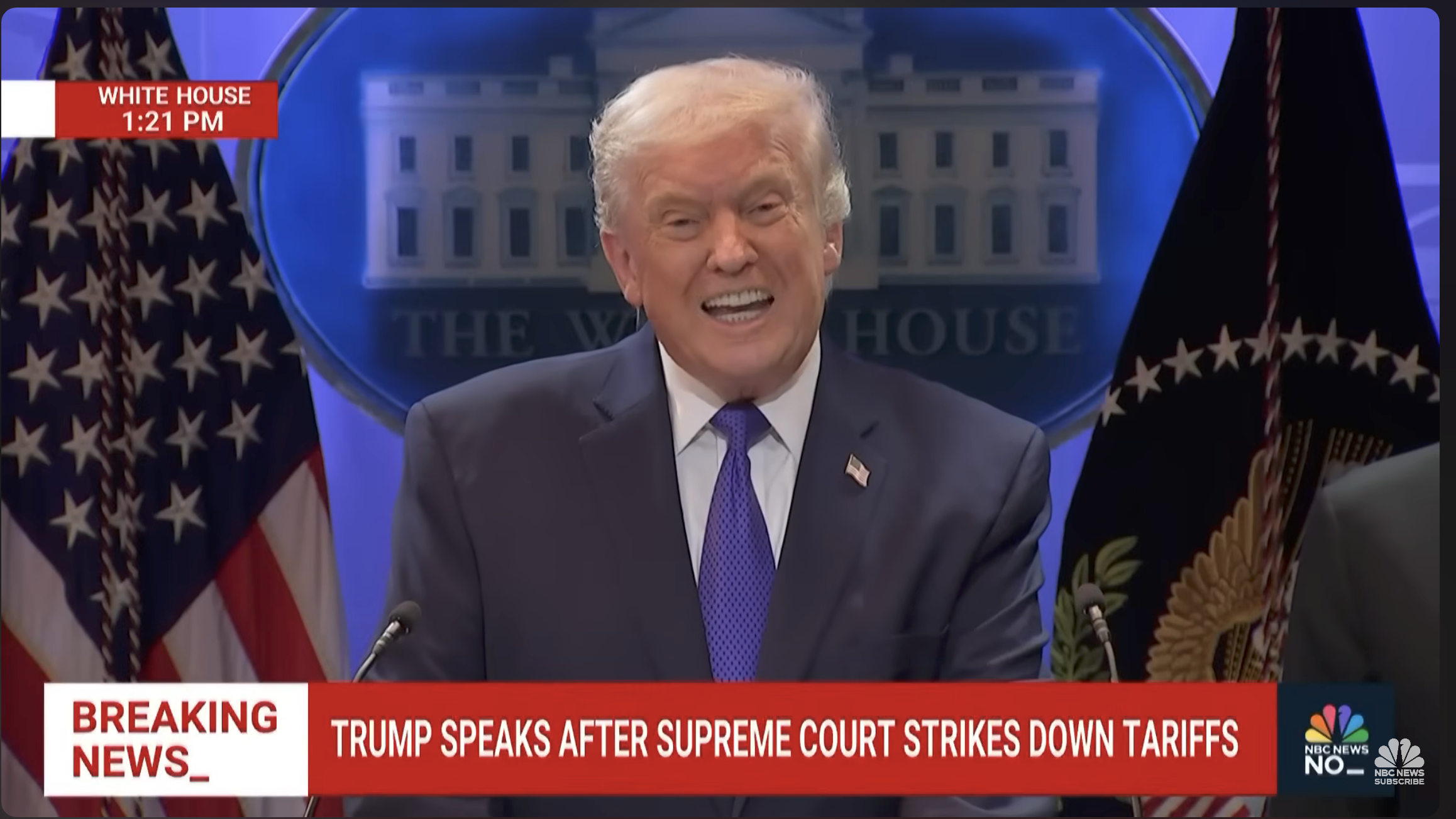
Trump’s Tariffs Are Illegal
Nearly a year ago, President Trump announced his “Liberation Day” tariffs on the world, deciding to raise prices on everything being imported into the country. From the White House announcement last year April: [1]
President Trump is invoking his authority under the International Emergency Economic Powers Act of 1977 (IEEPA) to address the national emergency posed by the large and persistent trade deficit that is driven by the absence of reciprocity in our trade relationships and other harmful policies like currency manipulation and exorbitant value-added taxes (VAT) perpetuated by other countries.
Using his IEEPA authority, President Trump will impose a 10% tariff on all countries. This will take effect April 5, 2025 at 12:01 a.m. EDT.
The following May, the Court of International Trade ruled that President Trump doesn’t have the authority to impose these tariffs. [2]. In striking down the Trump tariffs, the Court unanimously ruled that: [3]
The Constitution assigns Congress the exclusive powers to “lay and collect Taxes, Duties, Imposts and Excises,” and to “regulate Commerce with foreign Nations.” U.S. Const. art. I, § 8, cls. 1, 3. The question in the two cases before the court is whether the International Emergency Economic Powers Act of 1977 (“IEEPA”) delegates these powers to the President in the form of authority to impose unlimited tariffs on goods from nearly every country in the world. The court does not read IEEPA to confer such unbounded authority and sets aside the challenged tariffs imposed thereunder.
While this ruling came early, the tariffs remained in effect while the Supreme Court reviewed the case. These unconstitutional taxes have been paid almost entirely by American consumers and firms, according to an analysis from the Federal Reserve Bank of New York, explaining who pays import tariffs and how much (spoiler alert: 94% are borne by U.S. firms and consumers): [4]
Tariff incidence is the technical term for how the costs of a tariff are split between foreign exporters and domestic importers. While importers pay the duty, the “economic burden” of the tariff can be shifted onto exporters if they lower their export prices. We illustrate this effect through a simple example: Suppose foreign exporters charge $100 for a good, and the importing country decides to levy a 25 percent tariff on it. If the foreign price remains unchanged at $100, the duty paid is $25, increasing the import price to $125. In this case, the tariff incidence falls entirely on the importer; in other words, there is 100 percent pass-through from tariffs to import prices, and therefore on U.S. consumers and firms.
In contrast, the exporter might lower its price in order to avoid losing market share. If foreign exporters respond to the tariff by lowering their price to $80 (i.e., $100 divided by 1.25), the price paid by importers will remain $100 (with $20 in duties paid to the government). In this case, 100 percent of the tariff incidence falls on foreign exporters, who now receive $20 less for the same good; in other words, there is zero pass-through from the tariff since the import price is unchanged.
…
…94 percent of the tariff incidence was borne by the U.S. in the first eight months of 2025. This result means that a 10 percent tariff caused only a 0.6 percentage point decline in foreign export prices.
…
In sum, U.S. firms and consumers continue to bear the bulk of the economic burden of the high tariffs imposed in 2025.
This week, and nearly a year later, the Supreme Court finally weighed in – these Trump tariffs, invoked through his IEPPA authority, are in fact unconstitutional. This from NBC News reporting: [5]
The Supreme Court delivered a major blow to President Donald Trump, ruling Friday that he exceeded his authority when imposing sweeping tariffs using a law reserved for a national emergency.
The justices, divided 6-3, held that Trump's aggressive approach to tariffs on products entering the United States from across the world was not permitted under a 1977 law called the International Emergency Economic Powers Act (IEEPA).
Chief Justice John Roberts wrote the opinion for the Court in the 6-3 majority decision, concluding: [6]
The President asserts the extraordinary power to unilaterally impose tariffs of unlimited amount, duration, and scope. In light of the breadth, history, and constitutional context of that asserted authority, he must identify clear congressional authorization to exercise it.
IEEPA’s grant of authority to “regulate . . . importation” falls short. IEEPA contains no reference to tariffs or duties. The Government points to no statute in which Congress used the word “regulate” to authorize taxation. And until now no President has read IEEPA to confer such power.
We claim no special competence in matters of economics or foreign affairs. We claim only, as we must, the limited role assigned to us by Article III of the Constitution. Fulfilling that role, we hold that IEEPA does not authorize the President to impose tariffs.
Justice Neil Gorsuch joined the opinion and wrote clearly about the role of Congress and its necessity, since “deliberation tempers impulse”: [7]
For those who think it important for the Nation to impose more tariffs, I understand that today’s decision will be disappointing. All I can offer them is that most major decisions affecting the rights and responsibilities of the American people (including the duty to pay taxes and tariffs) are funneled through the legislative process for a reason. Yes, legislating can be hard and take time. And, yes, it can be tempting to bypass Congress when some pressing problem arises. But the deliberative nature of the legislative process was the whole point of its design. Through that process, the Nation can tap the combined wisdom of the people’s elected representatives, not just that of one faction or man. There, deliberation tempers impulse, and compromise hammers disagreements into workable solutions. And because laws must earn such broad support to survive the legislative process, they tend to endure, allowing ordinary people to plan their lives in ways they cannot when the rules shift from day to day. In all, the legislative process helps ensure each of us has a stake in the laws that govern us and in the Nation’s future. For some today, the weight of those virtues is apparent. For others, it may not seem so obvious. But if history is any guide, the tables will turn and the day will come when those disappointed by today’s result will appreciate the legislative process for the bulwark of liberty it is.
In oral arguments, the Administration admitted they didn’t have the authority, but did it anyway - “As the Government admits, the President and Congress do not “enjoy concurrent constitutional authority” to impose tariffs during peacetime” [8]
It is still troubling, however, that three justices still voted to support Trump on something clearly unconstitutional; as former Assistant United States Attorney Joyce Vance says, “the decision should have been 9-0.” [9] One of these justices supporting Trump is Justice Brett Kavanaugh - now famous for the “Kavanaugh Stop” where people shouldn’t have problems with ICE stopping them to show their papers, since “[i]f the person is a U.S. citizen or otherwise lawfully in the United States, that individual will be free to go after the brief encounter” [10]
Well, tell that to people all over the country subject to these ICE tactics which recent court rulings describe as “an assault on the constitutional order.” [11]
Antiseptic judicial rhetoric cannot do justice to what is happening. Across the interior of the United States, agents of the federal government—masked, anonymous, armed with military weapons, operating from unmarked vehicles, acting without warrants of any kind—are seizing persons for civil immigration violations and imprisoning them without any semblance of due process. The systematic character of this practice and its deliberate elimination of every structural feature that distinguishes constitutional authority from raw force place it beyond the reach of ordinary legal description. It is an assault on the constitutional order. It is what the Fourth Amendment was written to prevent. It is what the Due Process Clause of the Fifth Amendment forbids.
So, on these tariffs, how are these going to be refunded? When and if they are returned, it’s not as if prices will go down – any refunds would likely go to those that paid them to the government. The importers paid the tariffs and while they raised prices to pass the costs on to consumers, they’re likely not going to pass on the refunds.
I did see this humorous take on why it might be hard to return the tariffs when multiple parties ask for them at once – if you’ve seen It’s A Wonderful Life, you might appreciate the reference: [12]
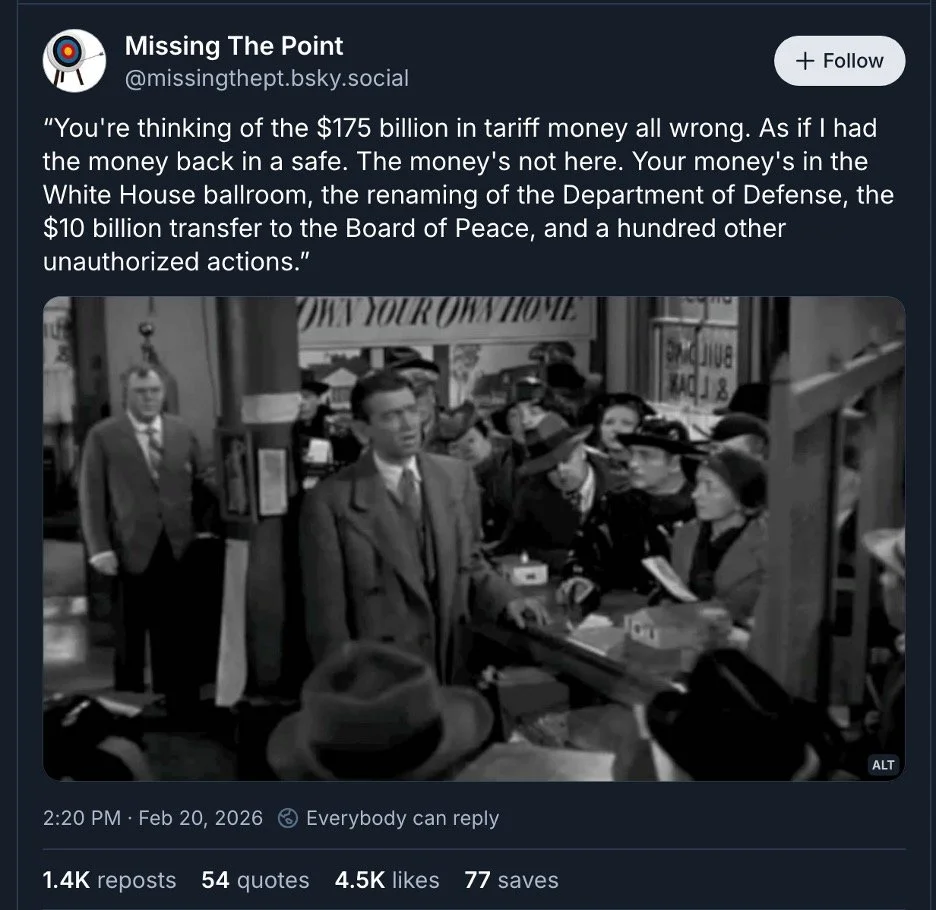
And how did the President act when he heard of the Supreme Court’s ruling? Just as you might expect. He threw a temper tantrum – this from the Wall Street Journal Editorial Board: [13]
President Trump owes the Supreme Court an apology—to the individual Justices he smeared on Friday and the institution itself. Mr. Trump doubtless won’t offer one, but his rant in response to his tariff defeat at the Court was arguably the worst moment of his Presidency.
From NPR reporting: [14]
At a hastily called press conference, an agitated Trump railed against the conservative Roberts and two of the courts other conservatives, Justices Neil Gorsuch and Amy Coney Barrett, both Trump appointees.
"They're just being fools and lapdogs for the RINOs and the radical left Democrats," Trump said, using the apparently derisive acronym for "Republicans in name only."
Here’s just a 13% snippet of Trump’s Rant these lengthy remarks at the press conference: [15]
The Supreme Court’s ruling on tariffs is deeply disappointing, and I’m ashamed of certain members of the court, absolutely ashamed, for not having the courage to do what’s right for our country.
I’d like to thank and congratulate Justices Thomas, Alito and Kavanaugh for their strength and wisdom and love of our country, which is right now very proud of those justices.
When you read the dissenting opinions, there’s no way that anyone can argue against them. There’s no way.
Foreign countries that have been ripping us off for years are ecstatic. They’re so happy, and they’re dancing in the streets, but they won’t be dancing for long, that I can assure you. The Democrats on the court are thrilled, but they will automatically vote no. They’re an automatic no, just like in Congress, they’re an automatic no. They’re against anything that makes America, strong, healthy and great again. They also are a, frankly, disgrace to our nation, those justices. They’re an automatic no, no matter how good a case you have, it’s a no. You can’t knock their loyalty, one thing you can do with some of our people. Others think they’re being politically correct, which has happened before far too often with certain members of this court, and it’s happened so often with this court — what a shame — having to do with voting in particular, when in fact they’re just being fools and lapdogs for the RINOs and the radical left Democrats and, not that this should have anything at all to do with it, they’re very unpatriotic and disloyal to our Constitution. It’s my opinion that the court has been swayed by foreign interests and a political movement that is far smaller than people would ever think. It’s a small movement. I won by millions of votes, we won in a landslide. With all the cheating that went on, there was a lot of it, we still won in a landslide. Too big to rig.
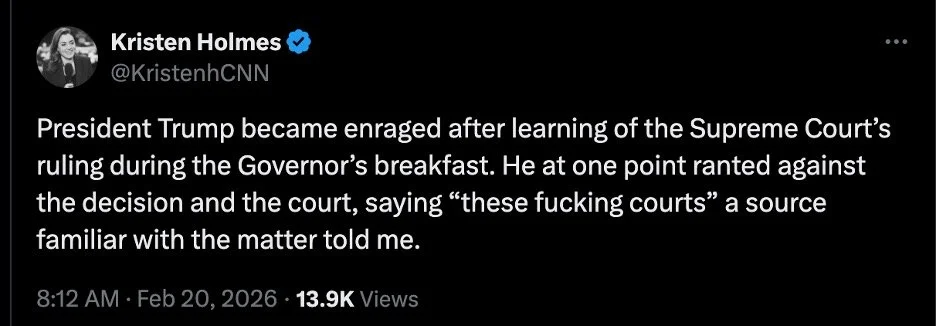
Apparently, Trump was at the Governor’s breakfast when he heard about the adverse ruling against his tariff actions: [16]
Trump reacted by reimposing his 10% global tariffs, but using a different legal framework to do so, and he even later said he might raise them to 15%. This from BBC News reporting: [17]
After the Supreme Court ruled against him on Friday, Trump signed a proclamation to impose a 10% global tariff to come into effect on 24 February.
Then on Saturday, Trump announced in a Truth Social post that he would be raising the tariff amount to 15%.
"I, as President of the United States of America, will be, effective immediately, raising the 10% Worldwide Tariff on Countries, many of which have been "ripping" the U.S. off for decades, without retribution (until I came along!), to the fully allowed, and legally tested, 15% level," he wrote.
The proclamation cites a never-used law known as Section 122, which gives the president power to put in place tariffs of up to 15% for 150 days, at which point Congress must step in.
So, obviously, the President is totally handling things well…
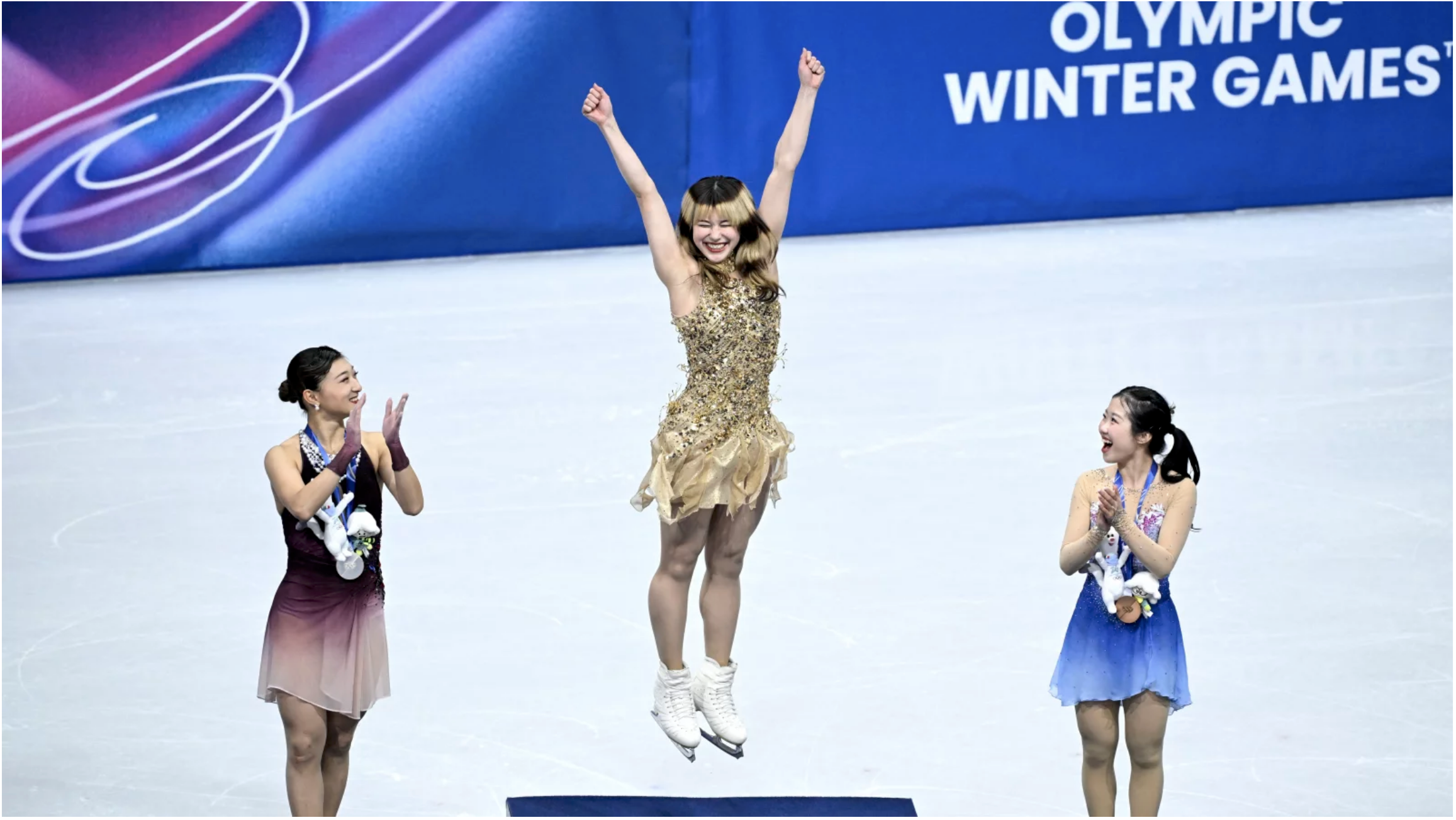
Alysa Liu
Liu won the women’s figure skating gold medal this week, and she did so exuding incredible joy in the process. Americans rightly beamed with pride with her first-place victory and were certainly impressed by her cheerfulness.
American victories on the international stage can definitely bring people together, but her father’s immigrant story should also give rise to pride among Americans. [18]
Arthur Liu moved to the Bay Area in California as a political refugee when he was 25 years old in order to flee China following his involvement in the pro-democracy protests around the time of the Tiananmen Square massacre in 1989, according to NBC Olympics.
He went on to earn a bachelor's degree and master's degree from universities in China before his move from China to California.
Arthur Liu also earned multiple degrees from U.S. universities, including an MBA at what is now Cal State East Bay and a law degree from the University of California's Hastings College of Law. He has since worked as a lawyer.
In March 2022, the Department of Justice unsealed criminal complaints alleging that Arthur Liu was targeted by agents of the Chinese government who tried to intimidate him for his criticism of the Chinese regime.
“They are still paying attention to me after 30-some years, since I organized protests and hunger strikes for democracy in China,” Arthur Liu told NBC News at the time.
Arthur Liu told The Associated Press that he had been warned about the scheme by the FBI in October 2021, as Alysa was preparing to compete in the Beijing Winter Olympics. He said he didn't tell her about it because he didn't want to distract her before the Games.
Alysa Liu finished seventh in the individual event.
“This is her moment. This is her once-in-a-lifetime opportunity to compete at the Olympic Games," her father told The Associated Press at the time. "I’m not going to let them stop her from going and I’ll do whatever I can to make sure she’s safe and I’m willing to make sacrifices so she can enjoy the moment. I’m not going to let them win — to stop me — to silence me from expressing my opinions anywhere.”
Alysa Liu had at least two people escorting her at all times during the Beijing Olympics. It came five months after Arthur Liu said a man called claiming to be an official with the U.S. Olympic & Paralympic Committee and asked for his and Alysa's passport numbers, according the AP.
“I’ve kind of accepted my life to be like this because of what I chose to do in 1989, to speak up against the government,” Arthur Liu said. “And I know the Chinese government will extend their long hands into any corner in the world, I’m going to continue to enjoy life and live life as I want to live. I’m not going to let this push me down and I’m not going to let them succeed.”
A Chinese Foreign Ministry spokesperson said in 2022 that China is “firmly opposed to the U.S. slandering by making an issue of this out of thin air.”
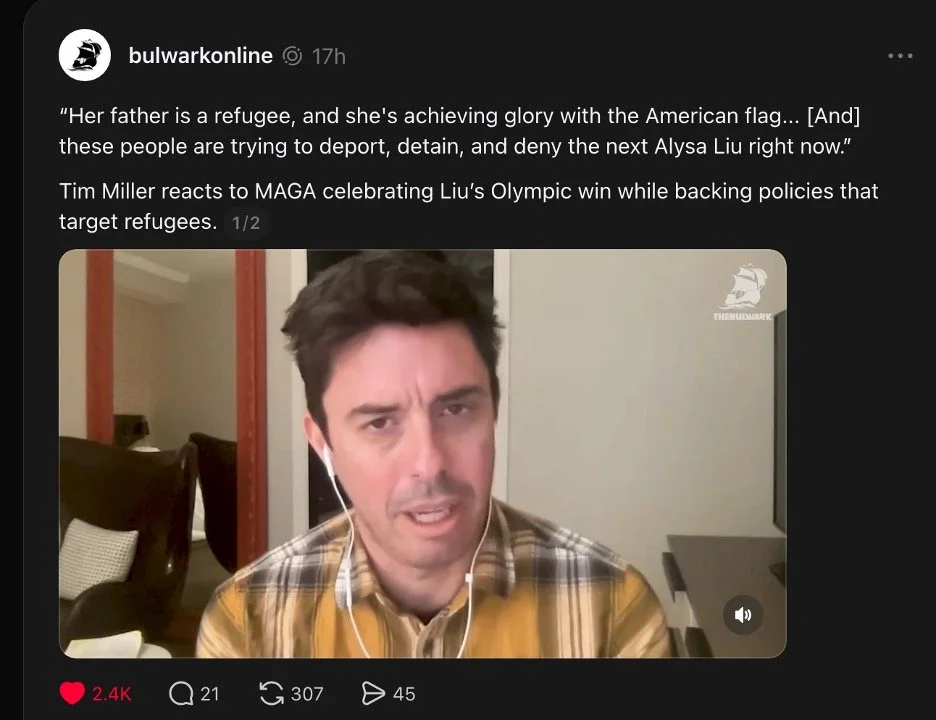
And the sad part of this amazing story is that the MAGA folks who claim to love America are “trying to deport, detain, and deny the next Alysa Liu right now.” Listen to Tim Miller here: [19]
Narratives
The book I’m reading or movie I’m watching
2026 Milan Cortina Olympics (now streaming on NBC and Peacock)
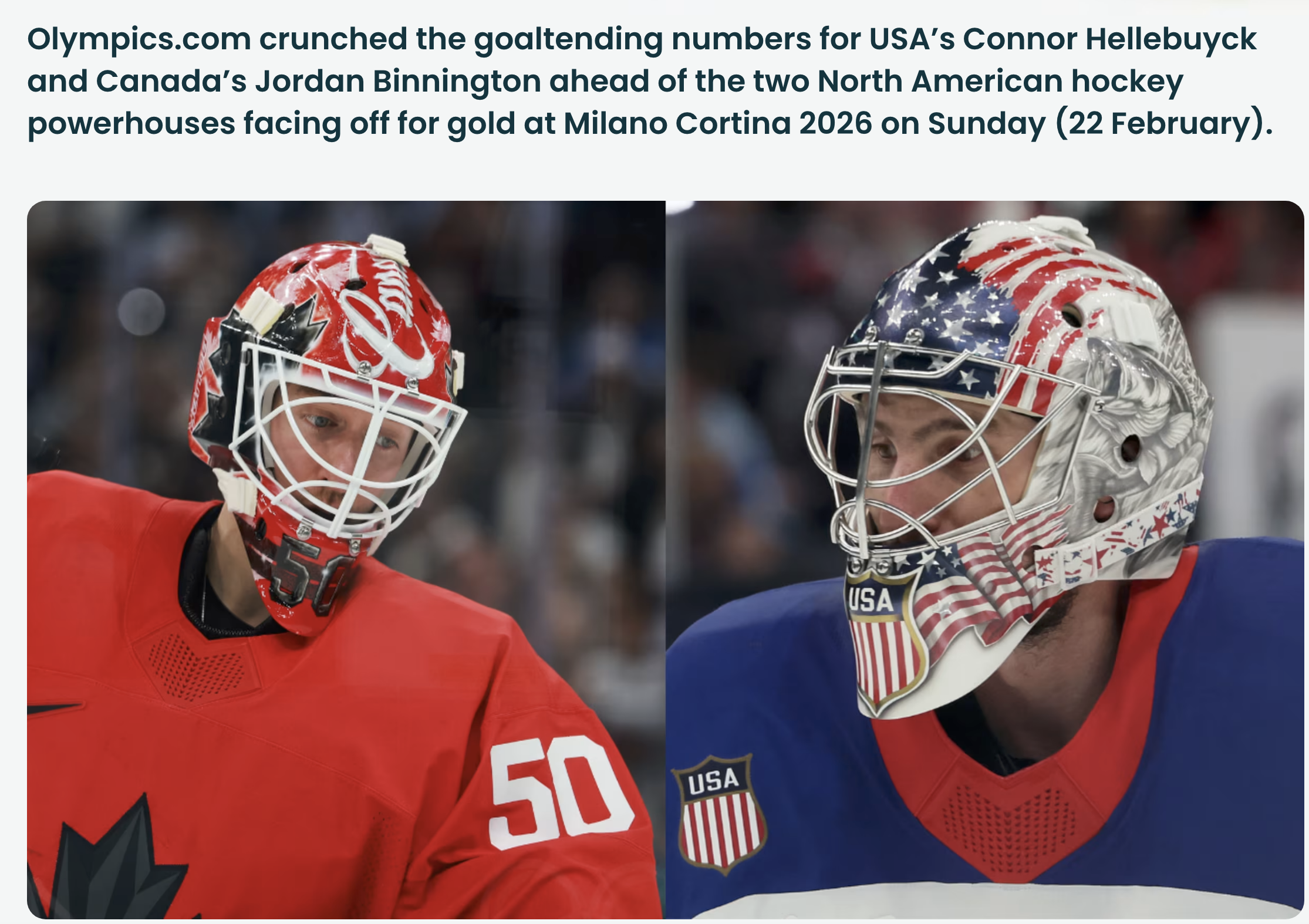
I’m still watching the Olympics to the end, but the upcoming USA-Canada men’s hockey gold medal final is a must-watch. The USA women’s team won the gold in overtime against Canada earlier in the week, so I’m definitely looking forward to watching this final live (airing at 5 am PT Sunday Feb 22).
GIF Game

Notes and Sources
[1] “Fact Sheet: President Donald J. Trump Declares National Emergency to Increase our Competitive Edge, Protect our Sovereignty, and Strengthen our National and Economic Security,” April 2, 2025, https://www.whitehouse.gov/fact-sheets/2025/04/fact-sheet-president-donald-j-trump-declares-national-emergency-to-increase-our-competitive-edge-protect-our-sovereignty-and-strengthen-our-national-and-economic-security/
[2] Dietrich Knauth and Daniel Wiessner, “US court blocks most Trump tariffs, says president exceeded his authority,” Reuters, May 28, 2025, https://www.reuters.com/world/us/us-court-blocks-trumps-liberation-day-tariffs-2025-05-28/
[3] V.O.S. Selections, Inc. v. Donald J. Trump, 1:25-cv-00066, (Ct. Intl. Trade), Document 55, May 28, 2025, https://storage.courtlistener.com/recap/gov.uscourts.cit.17080/gov.uscourts.cit.17080.55.0.pdf
[4] Mary Amiti, Chris Flanagan, Sebastian Heise, and David E. Weinstein, “Who Is Paying for the 2025 U.S. Tariffs?” Federal Reserve Bank of New York, February 12, 2026, https://libertystreeteconomics.newyorkfed.org/2026/02/who-is-paying-for-the-2025-u-s-tariffs/
[5] Lawrence Hurley, “Supreme Court strikes down most of Trump's tariffs in a major blow to the president,” NBC News, February 20, 2026, https://www.nbcnews.com/politics/supreme-court/supreme-court-strikes-trumps-tariffs-major-blow-president-rcna244827
[6] Learning Resources, Inc. v. Trump, 607 U.S. ______ (2026), https://www.supremecourt.gov/opinions/25pdf/24-1287_4gcj.pdf, p 20.
[7] Ibid., p 46.
[8] Ibid., p 13.
[9] Joyce Vance, “The Context You Need to Understand The Supreme Court's Tariffs Decision,” Civil Discourse with Joyce Vance, February 20, 2026, https://joycevance.substack.com/p/the-context-you-need-to-understand
[10] Noem v. Vasquez Perdomo, 606 U.S. ______ (2025), https://www.supremecourt.gov/opinions/24pdf/25a169_5h25.pdf, p 6.
[11] Urquilla-Ramos v. Trump, 2:26-cv-00066, (S.D.W. Va), Document 28, February 19, 2026, https://www.wvsd.uscourts.gov/sites/wvsd/files/opinions/2_26-cv-00066_Goodwin2-19-26.pdf
[12] Missing The Point [@missingthept.bsky.social], Bluesky, February 20, 2026, https://bsky.app/profile/missingthept.bsky.social/post/3mfd5dfznmk2o
[13] Wall Street Journal Editorial Board, “Trump Demeans Himself as He Attacks the Supreme Court,” Wall Street Journal, February 20, 2026, https://www.wsj.com/opinion/donald-trump-supreme-court-tariffs-ieepa-john-roberts-brett-kavanaugh-90daf559
[14] Nina Totenberg, “Trump excoriates Supreme Court justices after tariff loss,” February 21, 2026, https://www.npr.org/2026/02/21/g-s1-110961/supreme-court-tariffs
[15] Sean Boynton, “Read the transcript of Trump’s response to U.S. Supreme Court tariff ruling,” Global News, February 20, 2026, https://globalnews.ca/news/11676133/donald-trump-tariffs-supreme-court-reaction-transcript/
[16] Kristen Holmes [@KristenhCNN], X, February 20, 2026, https://x.com/KristenhCNN/status/2024879735428276517
[17] Jennifer Clarke, “What tariffs has Trump introduced and why?” BBC News, February 21, 2026, https://www.bbc.com/news/articles/cn93e12rypgo
[18] Scott Stump, “Alysa Liu Won Gold With Her Dad, 4 Siblings Cheering in the Crowd: All About Arthur Liu,” Today, February 20, 2026, https://www.today.com/parents/alysa-liu-parents-dad-arthur-liu-rcna259917
[19] Bulwark Online [@bulwarkonline], Threads, February 20, 2026, https://www.threads.com/@bulwarkonline/post/DVBA340lExG
Decisions with Mic Farris
Seek Truth. Honor Differences.