Why the First Amendment Matters
The killings of Renee Good and Alex Pretti – and the capturing of the truth by the public – make this more important than ever
If you’d like these posts delivered directly to you, subscribe to the Decisions newsletter now!
The Killings of Renee Good and Alex Pretti
In 2026, with the first month of the year, federal authorities shot and killed two Minneapolis residents for exercising their rights to protest what these authorities were doing.
And the only reason we even know the truth about this is because of people bearing witness and recording the actual events with their smartphones.
But this video evidence wasn’t because we passed a law requiring recording and access to video by law enforcement. It was because the power to capture and communicate the truth is guaranteed to be in the hands of the governed – the people.
If there weren’t any video, we wouldn’t know what the true facts were; we would have to rely on what those in government tell us.
The fact that there was video isn’t enough, however. We’ve known about cases where law enforcement have bodycam video footage, but conveniently turn their cameras off when the footage undermines the position of law enforcement. [1][2][3]
And with these videos, we clearly know that those in government - at least in this government - lie. And they lie in deadly ways.
Which means - without complementary video evidence - we may not know what other lies - and other deadly lies - may be out there.
For example, 32 people died in ICE custody in 2025 – that is nearly three times higher than the year before. According to The Guardian, [4] “[t]he agency was holding 68,440 people in detention in mid-December; nearly 75% of them had no criminal convictions. December was also the deadliest month in ICE custody – seven people died.”
We need to know the truth and the people must have the ability to capture and communicate what they see. So, if we value the freedoms we want to have in America, the people in government must never restrict the press’s ability to find and communicate the truth.
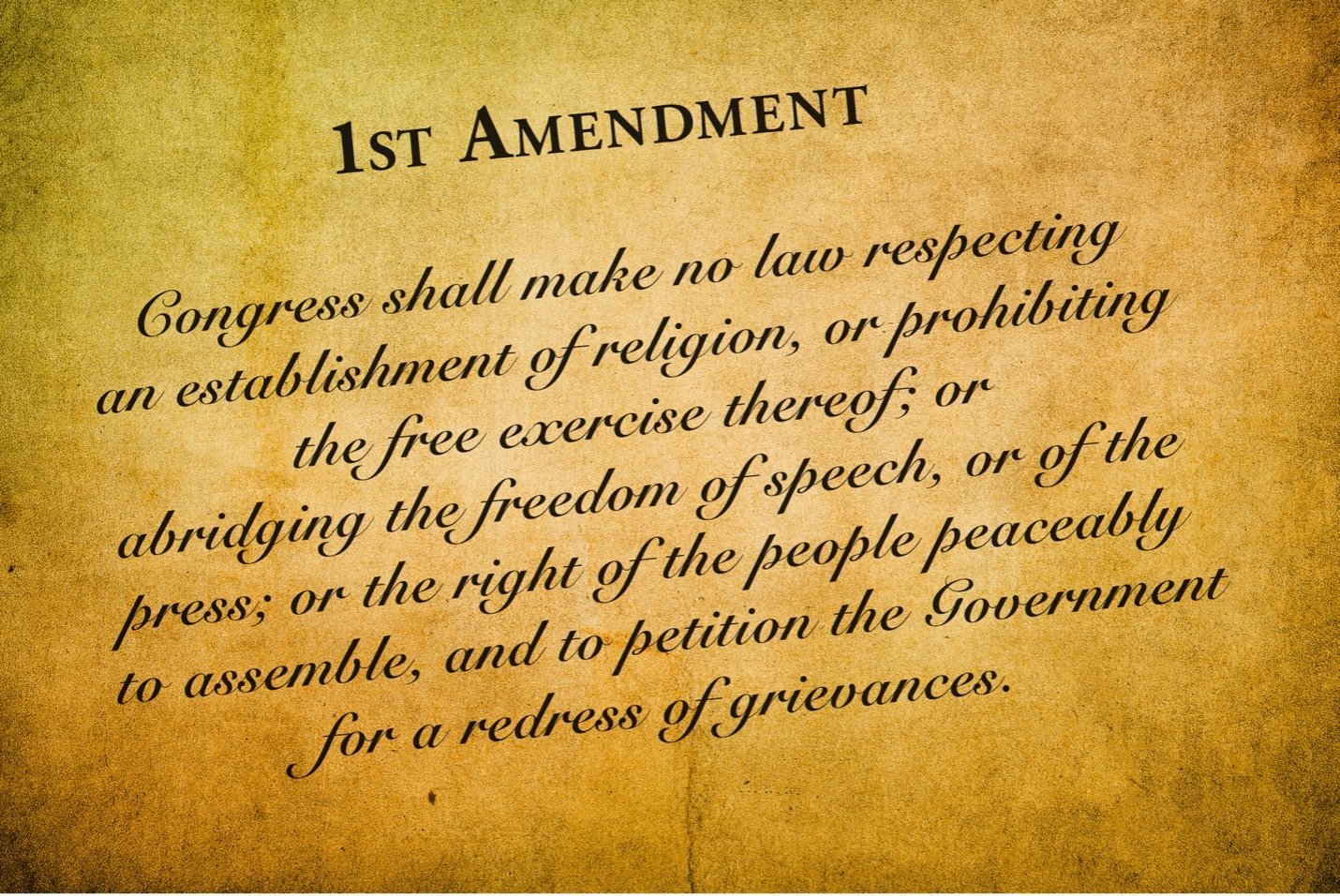
And in America, we are all “the press” - the First Amendment protects all of us – it protects your, my, and our collective ability to speak our truth and spread the word to others about what we know and what we think.
The Founders knew that this is the way people in power would behave - so they created a government that would attempt to never prevent the people from bearing witness, assembling peaceably, speaking freely, and expressing themselves nonviolently.
We have to remember – the “government” is really the collection of independent decision makers that we the people have empowered to act on our behalf. If there were no people in these positions, the “government” would be making no decisions.
So, the First Amendment – along with all of the other checks and balances written into the U.S. Constitution – is intended to recognize this fact – that people in power will attempt to keep their power and try to remain in power – and, given the nature of power, will tend to abuse that power.
We need to all be Founders again and reassert the importance of this inherently American value - government censorship has no place in America since the First Amendment is exactly what protects our other freedoms.
Narratives
The book I’m reading or movie I’m watching
Make No Law: The Sullivan Case and the First Amendment (by Anthony Lewis)
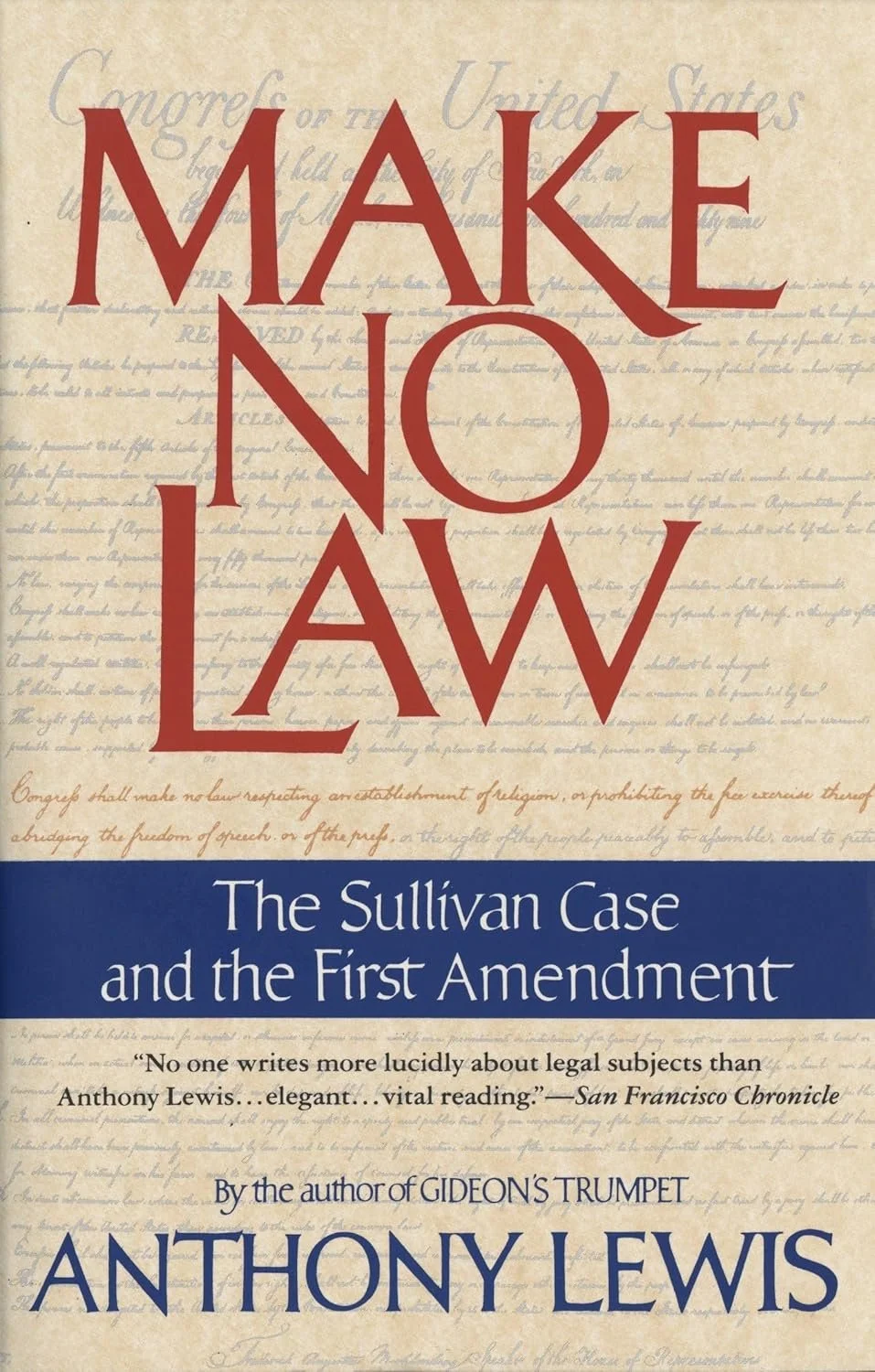
From the Amazon overview [5]:
A crucial and compelling account of New York Times Co. v. Sullivan, the landmark Supreme Court case that redefined libel, from the Pulitzer Prize–winning legal journalist Anthony Lewis.
The First Amendment puts it this way: "Congress shall make no law...abridging the freedom of speech, or of the press." Yet, in 1960, a city official in Montgomery, Alabama, sued The New York Times for libel—and was awarded $500,000 by a local jury—because the paper had published an ad critical of Montgomery's brutal response to civil rights protests.
The centuries of legal precedent behind the Sullivan case and the U.S. Supreme Court's historic reversal of the original verdict are expertly chronicled in this gripping and wonderfully readable book by the Pulitzer Prize Pulitzer Prize–winning legal journalist Anthony Lewis. It is our best account yet of a case that redefined what newspapers—and ordinary citizens—can print or say.
GIF Game
Notes and Sources
[1] Daralene Jones, “Mount Dora officers now under investigation over DUI case,” WFTV Channel 9 News, November 19, 2025, https://www.wftv.com/news/9investigates/mount-dora-officers-now-under-investigation-over-dui-case/MESCMPQ2ZJHNRAAL77KUKLYV6A/
[2] Nick Natario, “Courtroom video shows former HPD chief telling officers to turn off bodycams after a deadly raid,” ABC 13 Houston News, September 11, 2024, https://abc13.com/post/hpd-harding-street-raid-courtroom-video-during-murder-trial-shows-former-chief-art-acevedo-telling-officers-turn-off-bodycams/15292498/
[3] Amy Forliti, “Officer's body camera went dark during key moment of Patrick Lyoya's death,” PBS News, April 14, 2022, https://www.pbs.org/newshour/nation/officers-body-camera-went-dark-during-key-moment-of-patrick-lyoyas-death
[4] Maanvi Singh, Coral Murphy Marcos, and Charlotte Simmonds, “2025 was ICE’s deadliest year in two decades. Here are the 32 people who died in custody,” The Guardian, January 4, 2026, https://www.theguardian.com/us-news/ng-interactive/2026/jan/04/ice-2025-deaths-timeline
[5] Anthony Lewis, Make No Law: The Sullivan Case and the First Amendment, Knopf Doubleday Publishing Group, 1992, https://www.amazon.com/Make-No-Law-Sullivan-Amendment/dp/0679739394
Decisions with Mic Farris
Seek Truth. Honor Differences.