Zero Fail
The USPS rule to prevent nonexistent widespread voter fraud threatens election chaos
If you’d like these posts delivered directly to you, subscribe to the Decisions newsletter now!
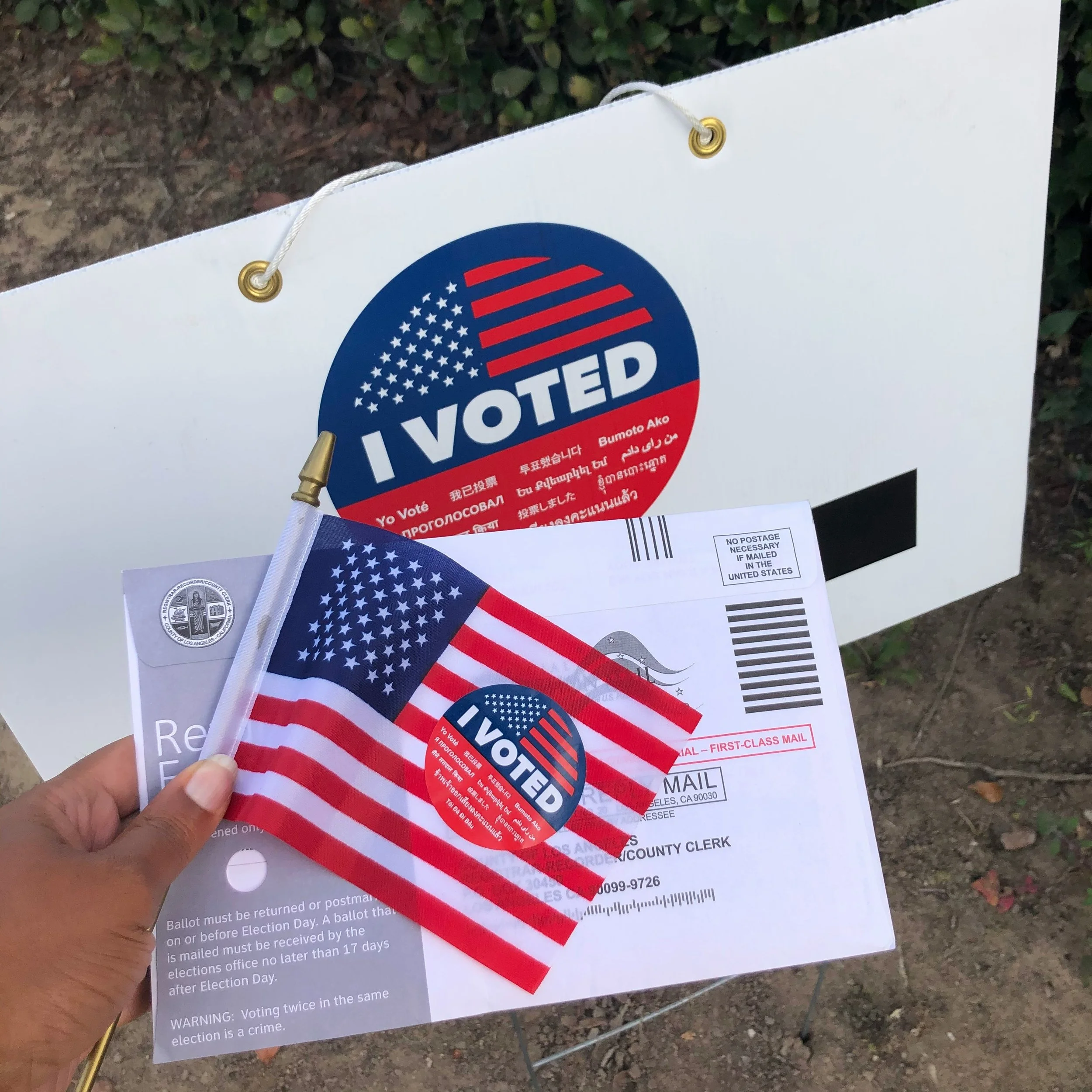
Photo by Janine Robinson (via Unsplash)
In the 2024 general election, nearly one in three Americans (31%) voted by mail, accounting for more than 48 million votes, [1] and the new rule from the US Postal Service threatens the system that tens of millions of Americans count on. Plus, the timing of the final rule only maximizes the potential chaos, since North Carolina started sending ballots out to absentee voters on Friday, [2] so the 2026 general election is already underway.
And a whistleblower just raised the stakes on just how much chaos could occur.
For background, in March of this year, President Trump issued an executive order [3] requiring that the USPS create nationwide standards for election ballots and that states send their official voter lists to the federal government so they can be used to validate whether any ballot should be delivered.
The Post Office (with exceptions relating to hazardous, restricted, or perishable items [4]) doesn’t make decisions about what they will or won’t deliver. So, the new Trump administration rule turns the USPS from a neutral delivery service to a federal gatekeeper on who gets to have their vote counted.
After the EO, the proposed rule affecting mail-in ballots was issued, and effected states and voter groups sued. After some back-and-forth, U.S. District Judge Indira Talwani issued a preliminary injunction on Friday preventing the final rule from going into effect. [5]
Within the last week, an anonymous whistleblower came forward to raise awareness on how disruptive this rule could be. U.S. Senator from Connecticut Richard Blumenthal went public with the whistleblower’s accusations on PBS NewsHour: [6]
The disclosure contends that, due to the new procedures, a single scanning error in a batch of tens of thousands of ballot envelopes could prevent any from reaching voters. It details a system that election officials have already warned could not be implemented before the first mail ballots begin going out Friday in North Carolina.
"The Postal Service has designed a system to disenfranchise millions of Americans," Blumenthal told reporters in advance of releasing the whistleblower information.
Senator Blumenthal also mentioned several details from the whistleblower complaint about reliability of the new rule and its implementation: [7]
That the USPS adopted a zero-percent failure threshold, meaning “if a barcode scanner fails to correctly read one barcode in a batch, the entire batch is rejected and returned to the state.” Despite the potentially widespread and catastrophic implications of this policy, “USPS does not have a clear policy as to how many ballots will be sampled in ballot mail batches.”
And, as teams scrambled ahead of the planned launch, the whistleblower was aware of multiple USPS official describing the development process as “a shit show.”
This “zero fail” aspect to the new USPS rule almost seems that the design is intentional to cripple mail-in voting rather than protect any level of election integrity.
As designed, if the barcode from one single ballot fails to scan in a bulk mailing of 10,000 ballots, the entire batch would not be delivered – this of course has the same effect as denying delivery of mail-in ballots unless batches are perfect, according to their rules.
By design, if the post office finds one ballot they say they can’t validate, thousands of other voters may not be able to vote without even knowing that they were disenfranchised.
The whistleblower described this verification process as being “entirely unforgiving.” [8]
Stepping in to prevent total chaos, U.S. District Judge Indira Talwani, in granting her preliminary injunction, highlighted that the U.S. Constitution’s Elections Clause [9] reserves the times, places, and manner of holding federal elections to the states. However, while Congress can override state regulations by establishing uniform rules for federal elections, Congress has not delegated any specific authority to the USPS regarding the treatment of election mail, and the Constitution “does not grant the President any specific powers over elections.” [10]
And here is the real issue.
While hypothetical scenarios are usually offered to show how seemingly easy it is to commit fraud through mail-in voting (or any other proposed scheme), there are many real-world checks in place that yield the high reliability and low rates of true fraud in American elections.
Within the system of checks within our elections system, when somebody decides that a person’s vote either should or shouldn’t count, there are two ways of making a mistake:
An ineligible or fraudulent vote is wrongly counted
An eligible vote is wrongly excluded
Generally, when you seek to decrease one source of error, you increase the other.
Voter fraud itself is extremely, extremely rare – though not zero, election law experts from The Cato Institute and voter-fraud research from The Heritage Foundation have both found no evidence of fraud at the scale claimed. [11][12] In hopes of reducing the already low fraudulent vote count to zero, the USPS rule would exclude an incredibly large number of eligible votes.
The only way an election system can guarantee zero fraud is to ensure that zero votes are ever cast – the same as not holding an election at all.
If the story is about designing a “zero fail” system, architects of such systems either don’t know what they’re doing, or they know exactly what they’re doing by catching very little real fraud while producing large collateral damage among legitimate voters of particular voter groups – where the effects of this aren’t random.
Former U.S. Attorney Joyce Vance raised this as a possibility in looking that the various outcomes that could still affect the election: [13]
What’s Donald Trump’s endgame here? The situation is a win-win for him if we don’t stay on top of it, understand what he’s trying to do, and outsmart him. First off, Trump can try to keep people from voting by eliminating mail voting as a prospect for them. In the six states where most voting is done by mail, this could amount to game-changing voter suppression. And even where ballots are successfully mailed and collected, this is still creating chaos around the elections. Chaos can keep people from voting, especially if it becomes too difficult to figure out what the right thing to do is, or when misinformation and disinformation about voting is spread. And finally, this gives Trump a narrative. If the courts rule against him and the Republican Party fares poorly in November, he’ll claim it’s due to fraud because the courts blocked his plan. Even if he wins in court, he’ll claim that the delay in implementing his executive order meant he couldn’t do everything he wanted to, and use that to cast doubt on Democratic gains.
Smartly from a decision making perspective, Judge Talwani’s preliminary injunction (which is indeed “preliminary” – the Department of Justice has already filed an appeal with the First Circuit Court of Appeals [14]) weighed the two sides of decision making appropriately when describing the impact: [15]
In balancing the harms based on the record before the court, the court finds, on one side, that immediate implementation of the [USPS rule] issued less than seventy days before the November 2026 election threatens disenfranchisement of millions of United States citizens who seek to vote by mail, … and, on the other side, that the record includes no evidence relating to fraudulent mail voting to support the rushed implementation of the [USPS rule].
So, while this is being fought in the courts, what can we do?
If you get your ballot by mail, look for it when your state starts mailing them out.
Know your options. In California, you can return your ballot by mail, drop it in an official drop box, or you can go to a polling station (either an early vote or same-day site) and vote in person.
Keep track of the progress of your ballot. In California, I receive a text when they mail my ballot to me (and a note to contact my county if I don’t receive it within 7 business days), and another one when they’ve received and counted my vote.
Share any helpful election information with your family, friends, and neighbors to ensure they can vote and that their vote is counted.
As of now, the USPS rule has been blocked, so mail-in voting should operate as it has in previous elections. However, this doesn’t mean the fight is over.
But the biggest takeaway – don’t give into the chaos…
Vote!
Notes and Sources
[1] “Nearly 1 in 3 Americans From Across the Aisle Voted by Mail in 2024 and 2022,” States United Democracy Center, September 4, 2025, https://statesunited.org/resources/americans-vote-by-mail-2024/
[2] Joseph Gedeon, “North Carolina becomes first state to send out mail-in ballots for US midterms,” The Guardian, September 4, 2026, https://www.theguardian.com/us-news/2026/sep/04/north-carolina-mail-in-ballots-midterms
[3] Donald J. Trump, Executive Order 14399, “Ensuring Citizenship Verification and Integrity in Federal Elections,” March 31, 2026, Code of Federal Regulations, 91 FR 17125, https://www.federalregister.gov/documents/2026/04/03/2026-06601/ensuring-citizenship-verification-and-integrity-in-federal-elections
[4] Publication 52 - Hazardous, Restricted, and Perishable Mail, USPS, August 2026, retrieved September 5, 2026, https://pe.usps.com/text/pub52/welcome.htm
[5] League of Women Voters of Massachusetts v. Trump, Case 1:26-cv-11549, (D. Mass.), Document 285, September 4, 2026, https://storage.courtlistener.com/recap/gov.uscourts.mad.298449/gov.uscourts.mad.298449.285.0_2.pdf
[6] Nicholas Riccardi, “Whistleblower: Postal Service's work to comply with Trump order is rushed and sloppy,” PBS, September 1, 2026, https://www.pbs.org/newshour/politics/whistleblower-postal-services-work-to-comply-with-trump-order-is-rushed-and-sloppy
[7] U.S. Senator Richard Blumenthal, “Following New Whistleblower Disclosure, Blumenthal Demands USPS Provide Documents, Answers About "Shit Show" Process to Screen Ballots & Potentially Catastrophic Impact on Mail-In Voting ,” press release, September 1, 2026, https://www.blumenthal.senate.gov/newsroom/press/release/following-new-whistleblower-disclosure-blumenthal-demands-usps-provide-documents-answers-about-shit-show-process-to-screen-ballots-and-potentially-catastrophic-impact-on-mail-in-voting
[8] Alexander Hutzler, “‘Unforgiving’ new USPS portal could reject 10,000 mail ballots due to a single error, whistleblower warns,” Democracy Docket, September 1, 2026, https://www.democracydocket.com/news-alerts/unforgiving-new-usps-portal-could-reject-10000-mail-ballots-due-to-a-single-error-whistleblower-warns/
[9] United States Constitution, Article I, Section 4, Clause 1.
[10] League of Women Voters of Massachusetts v. Trump, p 12.
[11] “Cato Experts React to President Trump’s Election Fraud Claims,” The Cato Institute, July 17, 2026, https://www.cato.org/news-releases/cato-experts-react-president-trumps-election-fraud-claims
[12] “Heritage Explains Voter Fraud,” The Heritage Foundation, retrieved September 5, 2026, https://www.heritage.org/election-integrity/heritage-explains/voter-fraud
[13] Joyce Vance, “I Doubt You’re Surprised, Civil Discourse with Joyce Vance, September 1, 2026, https://joycevance.substack.com/p/i-doubt-youre-surprised
[14] Yunior Rivas, “Trump DOJ says states can handle last-minute mail voting overhaul, asks appeals court to lift block,” Democracy Docket, September 5, 2026, https://www.democracydocket.com/news-alerts/trump-doj-says-states-can-handle-last-minute-mail-voting-overhaul-asks-appeals-court-to-narrow-block/
[15] League of Women Voters of Massachusetts v. Trump, p 45.
Decisions with Mic Farris
Seek Truth. Honor Differences.