Gerrymander Disaster
Republicans may be setting themselves up for a self-inflicted wipeout.
If you’d like these posts delivered directly to you, subscribe to the Decisions newsletter now!
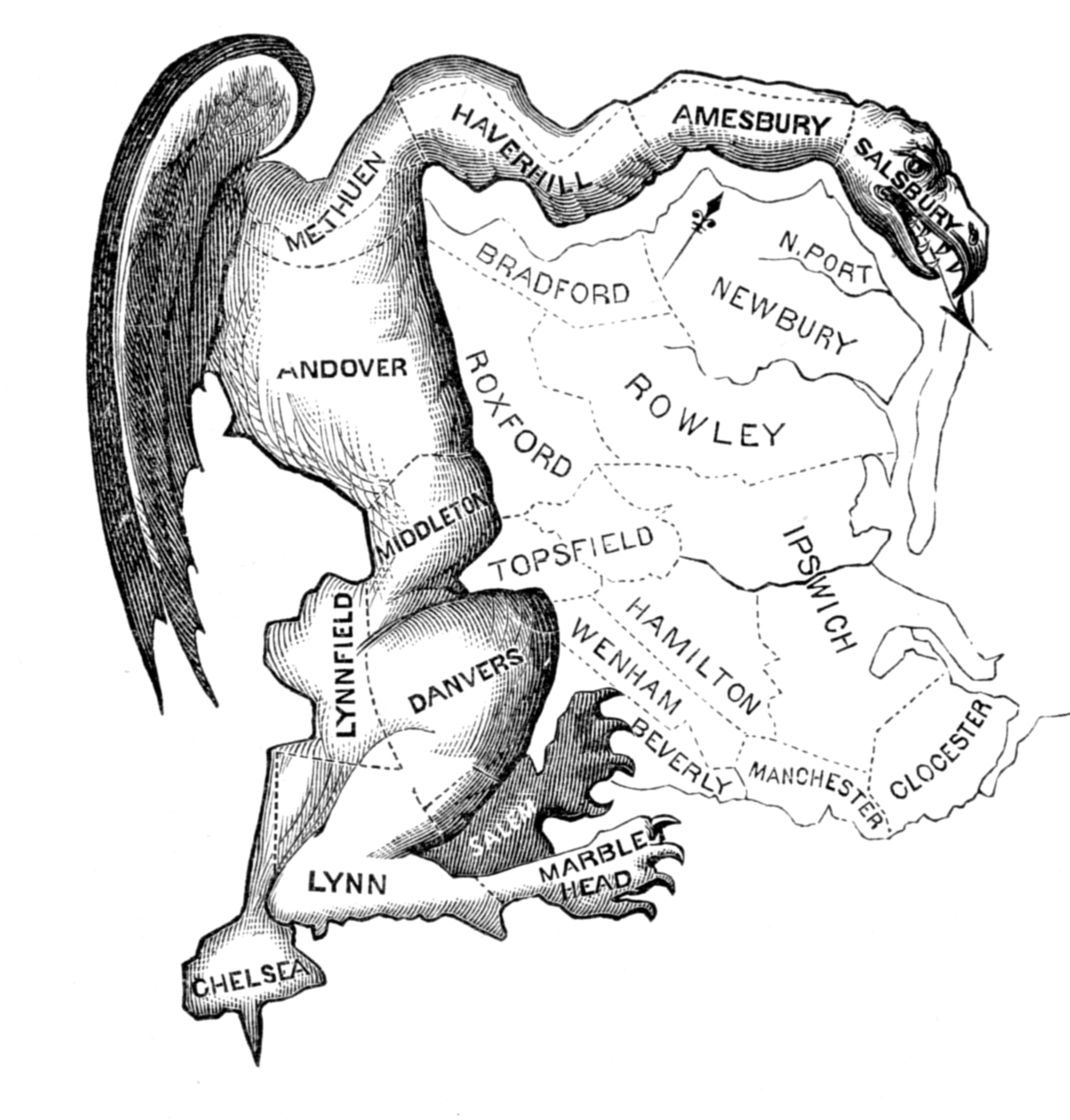
Printed in March 1812, this political cartoon was made in reaction to the newly drawn state senate election district of South Essex created by the Massachusetts legislature to favor the Democratic-Republican Party. The caricature satirizes the bizarre shape of the district as a dragon-like monster, and Federalist newspaper editors and others at the time likened it to a salamander. [1]
In this week’s article, we going to discuss gerrymandering and how the recent push by Trump’s Republican party may very well backfire.
What is “Gerrymandering”?
The Brennan Center for Justice discusses the intent of redistricting and why gerrymandering is counter to that intent: [2]
Every 10 years, after the census, states redraw the boundaries of congressional and state legislative districts to reflect population changes, a process known as redistricting. Done well, it’s a chance to create maps that elect legislative bodies that fairly represent communities and that are, in the words of John Adams in 1776, an “exact portrait, a miniature” of the people as a whole. Redistricting also takes place at the local level to redraw the boundaries of districts used to elect the members of bodies such county commissions, city councils, and school boards.
But redistricting also is a chance for those in control of the process to rig maps to favor certain candidates or political parties, a practice known as partisan gerrymandering.
Although gerrymandering has long been a problem in the United States, the redistricting cycle after the 2020 census was the first since the Supreme Court’s 2019 ruling [3] that gerrymandered maps can’t be challenged in federal court. Since then, Americans have seen gerrymandering ramped up to unprecedented levels in many places — and the worst may be yet to come.
So, where did gerrymandering start and why is it called “gerrymandering”? [4]
The term “gerrymander” was first used in 1812 when Massachusetts Governor Elbridge Gerry signed a bill for state Senate districts that included one in Essex County in the shape of a mythological salamander, [5] helping secure Senate control for his Democratic-Republican party. The crafting of the Senate districts proved incredibly successful given the election trend of 1812; Gerry narrowly lost his statewide contest to keep the governorship, and the Federalists won a 108-seat majority in the 750-member Massachusetts House. [6] However, even though collectively Federalist Senate candidates won more combined votes than their Democratic-Republican opponents, the state Senate stayed comfortably in Gerry’s party’s hands; Democratic-Republican candidates won by just enough district-by-district votes to capture 29 of the 40 contests. [7]
And the practice continues; in Wisconsin, Republican Governor Scott Walker suffered a similar fate as the Bay State’s Gerry. In 2018, Walker lost his re-election bid to Democrat Tony Evers by one percentage point, yet the state Assembly stayed safely in Republican hands by a 63-to-36 majority; [8] Walker signed the 2011 redistricting map that created the gerrymandered districts.
I write about this in my recent book Local Democracy in America, since “…letting the people decide is not a natural impulse. People in power want to be in power, want to stay in power, and dislike when others question their possession or use of power.” [9]. And gerrymandering isn’t the only way politicians work to keep power in their hands: [10]
…when it comes to elections, the outcomes should be determined by the people, not by lawmakers creating the rules. However, without constraints on those in power, that power will be leveraged to engineer outcomes rather than represent the people’s will.
Unfortunately, there are numerous, wide-ranging cases of American lawmakers developing elections rules to manufacture desired outcomes. The most common practice spanning multiple centuries in America is known as the “gerrymander” which carves up legislative districts to achieve almost pre-determined electoral outcomes. Other examples, both historic and current, include poll taxes, literacy tests, voter roll purges, forensic audits in search of widespread fraud patterns, reductions in the number of polling places and moving them to difficult-to-reach locations, reduction and/or elimination of mail-in ballot drop boxes location in large counties, voter ID laws, and restrictions of day and time that polling places are open.
In 2024, Republicans won 220 districts, maintaining control of the House of Representatives, while Democrats won 215 districts. [11] However, although Donald Trump won election to the presidency again, his approval ratings are now at his lowest, currently 36% in the most recent Gallup poll, [12] and there are real risks of losing control of Congress in the 2026 midterms.
Trump has proven so desperate that he has leaned on Republican-led states to gerrymander Congressional districts to keep his thin House majority. He’s called for Texas and Missouri to engage in the mid-cycle redistricting, and California countered these moves with Proposition 50, approved by statewide voters by a wide margin. [13]
While gerrymandering might work to squeeze out more seats under normal electoral conditions, the same may not be true in a wave election. In these cases, gerrymandering can actually have an outsized effect to backfire in a major way.
Generally, gerrymandering works by spreading out favorable voters among more districts winnable by the party in power and consolidating opposition voters into fewer districts. This is performed through a process of dividing and consolidating voters in districts called “cracking” and “packing.” [14]
Cracking splits groups of disfavored voters among multiple districts. With their electoral strength divided, cracked groups struggle to elect their preferred candidates in any of the districts because they are too small a share of the electorate to be effective.
Packing is the opposite of cracking. With packing, map drawers cram members of disfavored groups or parties into as few districts as possible. The packed groups are able to elect their preferred candidates by overwhelming margins, but their voting strength is weakened everywhere else.
This gerrymander technique has the effect of winning more seats by lessening the margin of victory in each district to do so. Under normal circumstances, this can be very effective to hold power, even though the public may have shifted its voting preferences slightly. For example, a political party might win three seats by a victory of 10 points, but the districts could be redrawn to win four seats by margins of 7 points. More seats, but tighter victories.
However, when the overall environment shifts significantly to the other party, there is a risk of losing a very large number of the narrowly-drawn seats that politicians hoped would have won in normal times.
And we may very well be in such an environment.
Blue Shift 2025
The recent 2025 special elections showed significant voter shifts toward Democrats. Here is an overview from NPR reporting of the recent partisan elections, comparing 2025 results to those in 2024 to measure the shift: [15]
There was yet another sign this week of a potential 2026 wave that could hand control of the House of Representatives to Democrats.
Republicans won a special congressional election in Tennessee, but only by 9 points in a district the Republican candidate last year won by 22 points.
That's in line with the double-digit overperformances by Democrats in elections this year.
On average, Democrats have done 14 points better than candidates in 2024 (including comparing the presidential results in 2024 to the governors' races in New Jersey and Virginia last month).
Here's how that breaks down:
FL-1 — 2024: R+32, 2025: R+15; Difference: D+17
FL-6 — 2024: R+33, 2025: R+14; Difference: D+19
VA-11 — 2024: D+34, 2025: D+50; Difference: D+16
AZ-7 — 2024: D+27, 2025: D+39; Difference: D+12
VA-GOV — 2024: D+6, 2025: D+16; Difference: D+10
NJ-GOV — 2024: D+6, 2025: D+14; Difference: D+8
TN-7 — 2024: R+22, 2025: R+9; Difference: D+13
Since Trump’s 2024 election, the 2025 special elections give us our first sample of how voters could change the landscape next year. Given the shift toward Democrats from the 2025 special elections, the Republican attempt to gerrymander may not be nearly enough to hold the House, and the shifts could lead to significant gains by Democrats in the 2026 House races.
In a wave election, banking on tighter margins of victory can be dangerous. Under these circumstances, gerrymandering puts more districts in play with the potential of Democrats winning even more seats than normal.
If the shift to Democrats continue into next November, the results could be devastating to Republicans. A shift of 14 points – the average shift from the 2025 special election tallies – would result in Democrats winning 35 seats relative to 2024 and a 252-183 advantage in the next Congress. Based on the 2024 results, if an average national shift toward Democrats occurred, here’s how these 2024 results would have changed: [16]
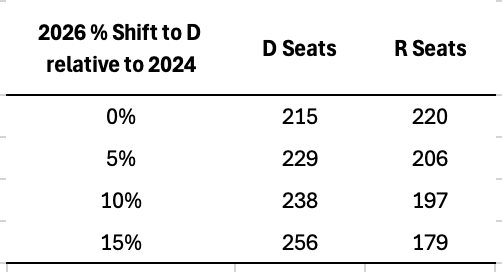
And Republican gerrymandering – making GOP victory margins tighter in hopes to win more districts – could make this prospective 69-seat margin even larger. This doesn’t even fold in the additional seats that Democrats could win due to responsive and temporary redistricting in California, Virginia, and other states.
Combine Democratic counter-redistricting with GOP gerrymanders that put more districts into play, there are even risks of creating a two-thirds Democratic majority in the House, enough to hold veto override votes and send constitutional amendments to the Senate for consideration.
This would be a wipeout; Republicans are riling the nation up to repudiate the 2024 Trump victories in a huge way.
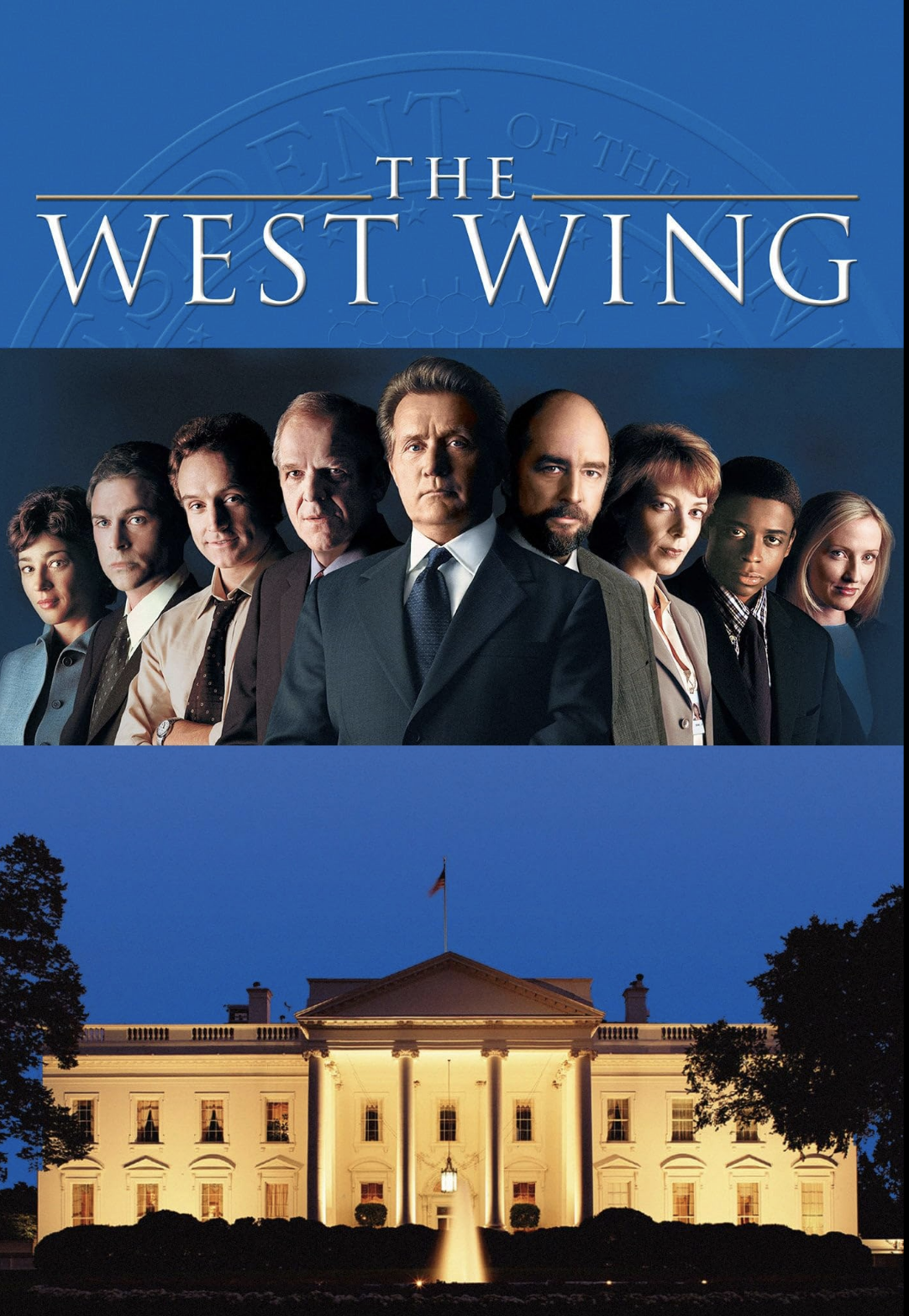
The West Wing is an American political drama television series created by Aaron Sorkin that was originally broadcast on NBC from September 22, 1999, to May 14, 2006. The series is set primarily in the West Wing of the White House, where the Oval Office and offices of presidential senior personnel are located, during the fictional two-term Democratic administration of President Josiah Bartlet. [17]
I’ve been rewatching West Wing episodes as a reminder of how we can hope a presidential administration can operate with high ideals and a true sense of the American spirit. With wholesale pardons of insurrectionists [18] and drug dealers [19] and attempting to undermine the constitutional protections of American citizenship by this administration, [20] the fictional Jed Bartlet is a fine antidote to the current president.
GIF Game

Fighting on all fronts for fair democratic elections
Notes and Sources
[1] “Gerrymandering,” Wikipedia, retrieved December 7, 2025, https://en.wikipedia.org/wiki/Gerrymandering
[2] Michael Li, “Gerrymandering Explained,” Brennan Center for Justice, August 10, 2021, retrieved December 7, 2025, https://www.brennancenter.org/our-work/research-reports/gerrymandering-explained
[3] Rucho v. Common Cause, 588 U.S. ___ (2019), https://www.supremecourt.gov/opinions/18pdf/18-422_9ol1.pdf
[4] Mic Farris, Tuesday Night Fights, unpublished manuscript, 2025.
[5] Elmer C. Griffith, The Rise and Development of the Gerrymander (Chicago: Scott, Foresman and Company, 1907), 17-18.
[6] Griffith, 73.
[7] Griffith, 72-73.
[8] Craig Gilbert, “New election data highlights the ongoing impact of 2011 GOP redistricting in Wisconsin,” Milwaukee Journal Sentinel, December 6, 2018.
[9] Mic Farris, Local Democracy in America, Amazon Kindle Direct Publishing, 2025, p. 3.
[10] Mic Farris, Local Democracy in America, p. 9.
[11] “United States House of Representatives elections, 2024,” Ballotpedia, retrieved December 7, 2025, https://ballotpedia.org/United_States_House_of_Representatives_elections,_2024
[12] Megan Brenan, “Trump's Approval Rating Drops to 36%, New Second-Term Low,” Gallup, November 28, 2025, https://news.gallup.com/poll/699221/trump-approval-rating-drops-new-second-term-low.aspx
[13] Mic Farris, “Routes to Power,” September 7, 2025, https://www.micfarris.com/articles/routes-to-power
[14] Michael Li, “Gerrymandering Explained”
[15] Domenico Montanaro, “Takeaways from the latest special election and what it means for control of the House,” NPR, December 6, 2025, https://www.npr.org/2025/12/06/nx-s1-5634822/takeaways-special-election-house-midterms
[16] “Election results, 2024: Congressional margin of victory analysis,” Ballotpedia, retrieved December 7, 2025, https://ballotpedia.org/Election_results,_2024:_Congressional_margin_of_victory_analysis
[17] “The West Wing,” Wikipedia, retrieved December 7, 2025, https://en.wikipedia.org/wiki/The_West_Wing
[18] Donald J. Trump, Presidential Proclamation 10887, “Granting Pardons and Commutation of Sentences for Certain Offenses Relating to the Events at or Near the United States Capitol on January 6, 2021,” January 20, 2025, Code of Federal Regulations, 90 FR 8331, https://www.federalregister.gov/documents/2025/01/29/2025-01950/granting-pardons-and-commutation-of-sentences-for-certain-offenses-relating-to-the-events-at-or-near
[19] Jeff Mason, Andrew Hay and Diego Oré, “Trump frees Honduran leader convicted on cocaine charges, sparks outcry from Democrats,” Reuters, December 2, 2025, https://www.reuters.com/world/americas/former-honduran-president-released-us-prison-after-trump-pardon-2025-12-02/
[20] Donald J. Trump, Executive Order 14160, “Protecting the Meaning and Value of American Citizenship,” January 20, 2025, Code of Federal Regulations, 90 FR 8449, https://www.federalregister.gov/documents/2025/01/29/2025-02007/protecting-the-meaning-and-value-of-american-citizenship
Decisions with Mic Farris
Seek Truth. Honor Differences.