Terrible Decisions
Betting markets, crypto, voting on truth – time to raise our ethical standards.
If you’d like these posts delivered directly to you, subscribe to the Decisions newsletter now!

Betting Markets to Find Truth
A heavily-advertised betting platform called Kalshi just raised $1 billion in its latest Series E round of funding. [1] Here’s the brief overview of this company from Wikipedia: [2]
Founded in 2018, Kalshi was established by Tarek Mansour and Luana Lopes Lara. The concept for the platform originated while the founders were working as financial analysts, where they observed the difficulties investors faced when attempting to hedge exposure to unpredictable macro events, such as the Brexit referendum. Motivated by the lack of direct instruments allowing individuals to guard against unfavorable outcomes, the founders envisioned a regulated marketplace enabling users to take positions on future real-world events. (emphasis added)
From Kalshi’s website, they describe that their platform and activities are regulated by the Commodity Futures Trading Commission (CFTC) [3] and stresses that “[r]egulation offers a framework for the security of transactions and safeguards against fraud and manipulation, protecting your investments.” (emphasis added)
They say that this is a “regulated marketplace,” but the only real regulation is on the agreements of payout - if one agrees to make a payout to a bettor based on the outcome, the regulations provide reliability about how the payout happens. The transactions for placing bets and paying off wins and losses are regulated – the events on which the bets are being placed are not.
And that’s a problem.
It’s the same as if someone wanted to place a bet on the 1919 White Sox losing the World Series, and the regulation would oversee that that bet was paid off when they did lose.
However, nothing appears to prevent the behind-the-scenes corruption of fixing the outcome on the regulated bets that are placed.
Such established and legal marketplaces might be great for financial professionals creating new instruments used to hedge their investments. However, these derivatives open up the potential for manipulation of outcomes by those with more insider and potentially corrupting information about these outcomes.
An interesting 60 Minutes interview by Anderson Cooper peered into another of these betting platforms: Polymarket. Here is the piece on Polymarket CEO Shayne Coplan and his venture: [4]
The interview starts with a discussion about the outcome of the 2024 presidential election. It’s certainly harder to rig an election than it is to rig individual decisions, but imagine if you had inside influence into whether and when marijuana would be reclassified from a Schedule I drug to a Schedule III drug (which, by the way, appears likely [5]).
True transparency into such decision making – government or otherwise - does help matters, but the fast drive to cash in leads to some (I think) terrible cultural outcomes, undermining reliable decision making by those making the decisions and by those relying on these decisions.
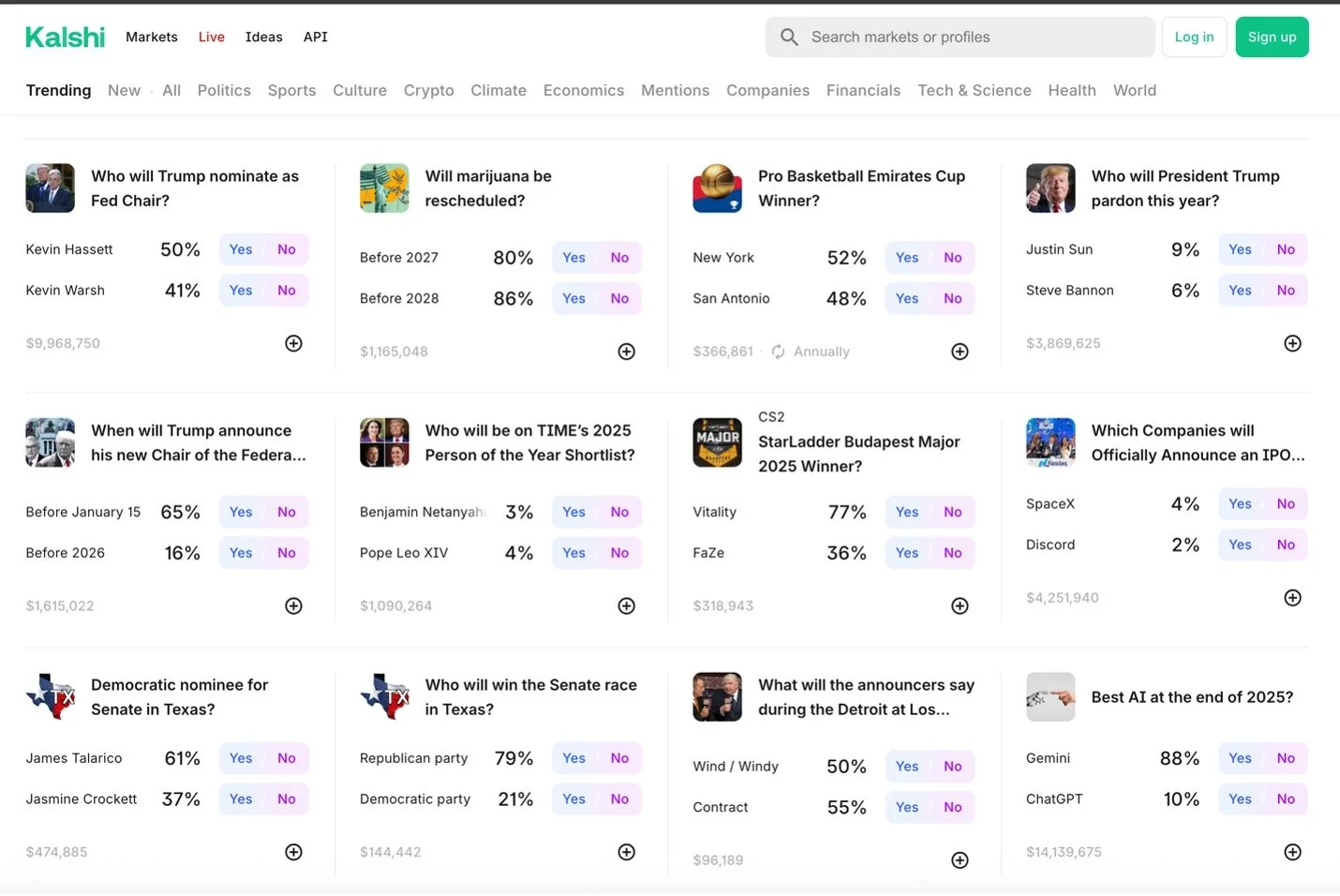
Here is just a small sample of the questions on which people can place bets on Kalshi right now: [6]
Who will Trump nominate as Fed Chair?
Will marijuana be rescheduled?
Pro Basketball Emirates Cup Winner?
Who will President Trump pardon this year?
Who will be on TIME’s 2025 Person of the Year Shortlist?
StarLadder Budapest Major 2025 Winner?
Which companies will officially announce an IPO this year?
Democratic nominee for Senate in Texas?
Who will win the Senate race in Texas?
What will the announcer say during the Detroit at Los Angeles R pro football game?
Best AI at the end of 2025?
By the way, smart people come up with some terrible ideas all the time and making money on the idea is not always correlated with the idea being a good one.
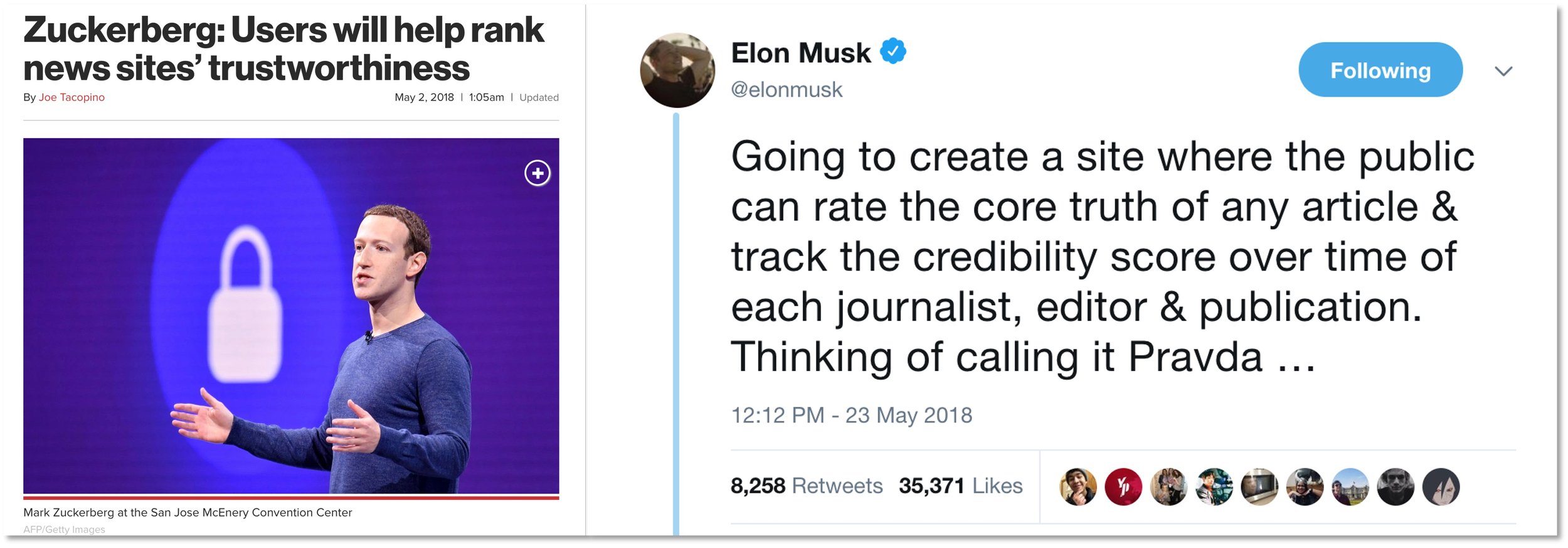
One example was supported years ago by both Mark Zuckerberg and Elon Musk: let’s let users vote up or down the truthfulness of content. [7][8]
Individuals are motivated by what they see as the truth, but also what they believe the consequences of their decisions are. [9] People can rationalize a lot of their decisions, even when they know they are not aligned with the truth. Plus, people will claim something to be true that isn’t, because the real truth is hard to accept. Said another way, they will lie to themselves and make decisions accordingly.
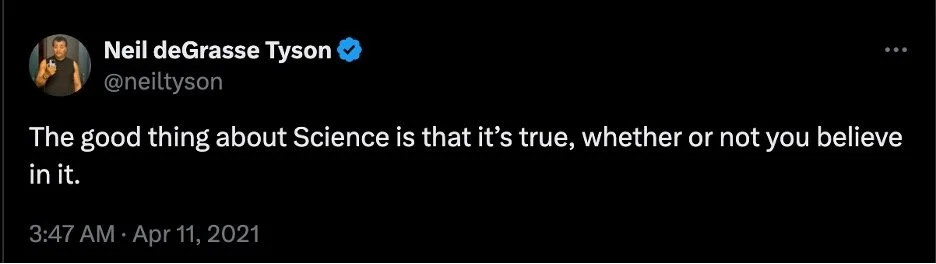
We don’t want truth to be put to a vote – that’s not the way it works. (By the way, this isn’t how science works; as Neil DeGrasse Tyson says, “The good thing about Science is that it’s true, whether or not you believe in it.” [10])
And in government, this is why we have ethics laws and why we should care about and uphold them. We have to protect the integrity of the decisions made by those in power.
In our country, we can think of Article I, Section 9, Clause 8 of the U.S. Constitution (known by the fancy name of the Foreign Emoluments Clause) as the original American ethics law: [11]
No Title of Nobility shall be granted by the United States: And no Person holding any Office of Profit or Trust under them, shall, without the Consent of the Congress, accept of any present, Emolument, Office, or Title, of any kind whatever, from any King, Prince, or foreign State.
America’s original Founders didn’t want our leaders to be unduly influenced by foreign governments for America’s decisions.
They put into the Constitution that anyone in the government couldn’t accept a noble title or anything of value (land, money, or anything of value “of any kind whatever”) from a foreign government. [12]
So, when the President and his family launched his $TRUMP crypto coin, where anyone can purchase the coin “a few days before the presidential inauguration…[and] in the first few weeks after the launch, the Trump crew got more than $300 million from this, according to the Financial Times,” [13] “[c]ritics accused Trump of cashing in on the presidency.” [14]
"Trump owning 80 percent and timing launch hours before inauguration is predatory and many will likely get hurt by it," Nick Tomaino, a crypto venture capitalist, said in a social media post.
The prohibition to receiving emoluments and any other ethics laws are all in the effort of ensuring that decision making is pure and that the values used to judge what decision should be made is aligned with the interests of people relying on those decisions.
When it comes to the explosion of betting markets, the long-term impacts will be less about financial innovation and more about extracting money and risking the corruption of that decision making to do so.
When we ask participants to grade their sense of what’s true and then use the votes to decide that this IS the truth, we risk being manipulated by people who absolutely know better and have huge financial and power-driven incentives to direct these outcomes.
When don’t stand up for what’s right and uphold those ethics, holding government officials truly accountable, we undermine our own ability to govern ourselves.
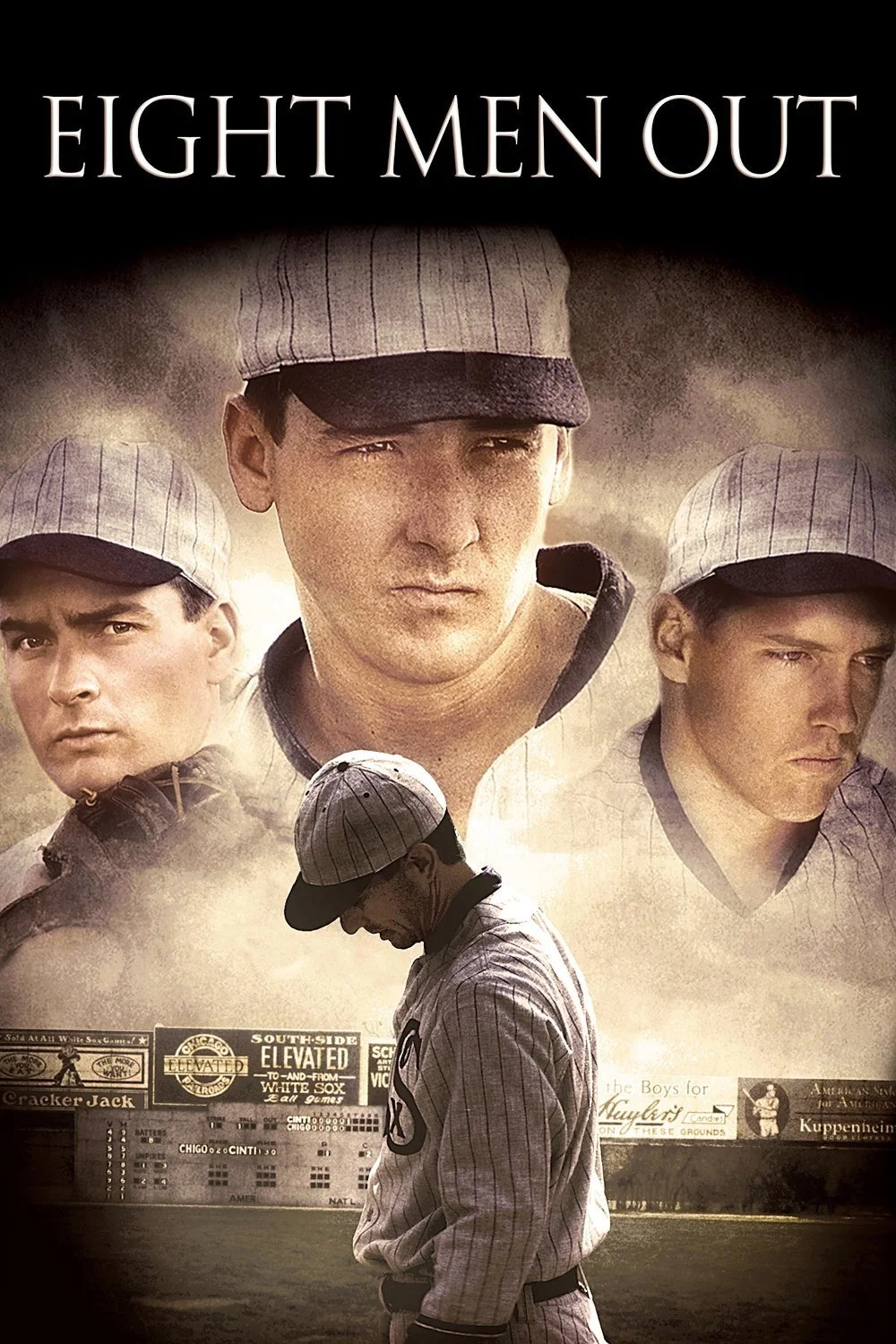
Below is an overview of the film and the Black Sox Scandal from Wikipedia [15][16]:
Eight Men Out is a 1988 American sports drama film based on Eliot Asinof's 1963 book Eight Men Out: The Black Sox and the 1919 World Series.[3] It was written and directed by John Sayles. The film is a dramatization of Major League Baseball's Black Sox Scandal in which eight members of the Chicago White Sox conspired with gamblers to lose the 1919 World Series.
The Black Sox Scandal was a game-fixing scandal in Major League Baseball (MLB) in which eight members of the Chicago White Sox were accused of intentionally losing the 1919 World Series against the Cincinnati Reds in exchange for payment from a gambling syndicate, possibly led by organized crime figure Arnold Rothstein. There is strong evidence both for and against Rothstein's involvement; however, there is no conclusive indication that the syndicate's actions were directed by or involved organized crime.
In response to the scandal, the National Baseball Commission – the then-governing body of Major League Baseball - was dissolved, and Judge Kenesaw Mountain Landis was appointed to be the first commissioner of baseball, given absolute control over the sport to restore its integrity.
Despite acquittals in a public trial in 1921, Landis permanently banned all eight implicated players from professional baseball. The Baseball Hall of Fame eventually defined the punishment as banishment from consideration for the Hall. Despite requests for reinstatement in the decades that followed (particularly in the case of Shoeless Joe Jackson), the ban remained in force for more than a century.
An ironic note, however, from the topic of this newsletter, we might question the commitment of sports leagues to such integrity. There are now tighter connections between sports leagues and legalized betting on sports league outcomes (through such platforms as DraftKings, FanDuel, ESPNBet, and BetMGM), plus this year, MLB Commissioner Rob Manfred reinstated the Black Sox and several other now-deceased players. [17]
GIF Game

Love America - Fight Corruption
Notes and Sources
[1] “Kalshi Reaches $11 Billion Valuation as App Takes over America,” Kalshi.com, December 2, 2025, retrieved December 14, 2025, https://news.kalshi.com/p/kalshi-11-billion-valuation-series-e
[2] “Kalshi,” Wikipedia, retrieved December 14, 2025, https://en.wikipedia.org/wiki/Kalshi
[3] “How is Kalshi regulated?” Kalshi.com, retrieved December 14, 2025, https://help.kalshi.com/kalshi-101/how-is-kalshi-regulated
[4] “Polymarket CEO says his prediction market is ‘the most accurate thing we have as mankind right now,’” YouTube, November 30, 2025, retrieved December 14, 2025, https://www.youtube.com/watch?v=ZA5bY4K9XPs
[5] Alex Harring and Brandon Gomez, “Trump expected to sign executive order to reclassify marijuana as soon as Monday, source tells CNBC; pot stocks surge,” CNBC, December 12, 2025, https://www.cnbc.com/2025/12/12/cannabis-stocks-trump-regulations.html
[6] Kalshi.com, retrieved December 14, 2025, https://kalshi.com/
[7] Joe Tacopino, “Zuckerberg: Users will help rank news sites’ trustworthiness,” New York Post, May 2, 2018, https://nypost.com/2018/05/02/zuckerberg-users-will-help-rank-news-sites-trustworthiness/
[8] Elon Musk [@elonmusk], X, May 23, 2018, https://x.com/elonmusk/status/999367582271422464?lang=en
[9] Mic Farris, “Making Decisions: Individually and Collectively,” February 9, 2025, https://www.micfarris.com/articles/making-decisions-individually-collectively
[10] Neil deGrasse Tyson [@neiltyson], X, April 21, 2021, https://x.com/neiltyson/status/1381197292728942595?lang=en
[11] – United States Constitution, Article I, Section 9, Clause 8, https://constitution.congress.gov/constitution/article-1/#article-1-section-9-clause-8
[12] Zephyr Teachout and Seth Barrett Tillman, “The Foreign Emoluments Clause: Article I, Section 9, Clause 8,” National Constitution Center, retrieved December 14, 2025, https://constitutioncenter.org/the-constitution/articles/article-i/clauses/759
[13] Darian Woods, Wailin Wong, Corey Bridges, and Kate Concannon, “How Trump is making coin from $TRUMP coin,” NPR, May 22, 2025, https://www.npr.org/2025/05/22/1252898728/how-trump-is-making-coin-from-trump-coin
[14] Ana Faguy, “Trump launches cryptocurrency with price rocketing,” BBC, January 18, 2025, https://www.bbc.com/news/articles/c9vmym2jvy9o
[15] “Eight Men Out,” Wikipedia, retrieved December 14, 2025, https://en.wikipedia.org/wiki/Eight_Men_Out
[16] “Black Sox Scandal,” Wikipedia, retrieved December 14, 2025, https://en.wikipedia.org/wiki/Black_Sox_Scandal
[17] Don Van Natta Jr., “Pete Rose, 'Shoeless' Joe Jackson among players reinstated by MLB,” ESPN, May 13, 2025, https://www.espn.com/mlb/story/_/id/45115659/pete-rose-shoeless-joe-jackson-players-reinstated-mlb
Decisions with Mic Farris
Seek Truth. Honor Differences.