Stopping the Next “Stop the Steal”
GOP leaders are already questioning election results that aren’t going their way. Knowing the pattern helps us to prevent attempts to steal results in November.
If you’d like these posts delivered directly to you, subscribe to the Decisions newsletter now!
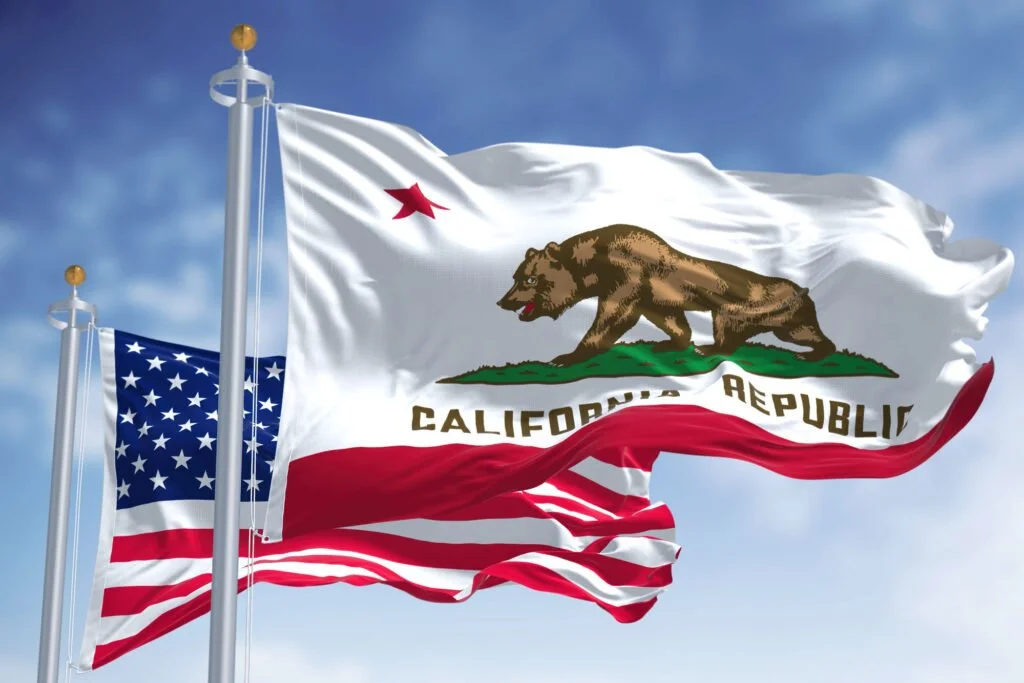
The California primaries closed on June 2nd. Within days, a familiar pattern emerged: Trump-endorsed candidates who led early on election night - Steve Hilton for Governor, Spencer Pratt for Los Angeles Mayor - gradually slipped as mail-in ballots were counted. And just as predictably, the accusations of fraud followed - not based on evidence, but because counting all the votes was inconvenient.
For Republicans, this is the epitome of outcome-based decision making. And it's worth calling out, since understanding what is done and why is the first step to defending against it.
What Actually Happened in California
California is one of eight states that sends mail-in ballots to all registered voters, and nearly 90% of voters cast their ballots that way in recent elections. [1] Mail-in ballots require more processing - signature verification, eligibility checks, ballot curing for technical errors - and California law allows ballots postmarked by Election Day up to seven days to arrive and still be counted. None of this is hidden or new.
Much like your tax returns if you submit them by mail - if they are postmarked by April 15, your return isn’t considered late. [2]. In California, if your ballot is postmarked by Election Day and it arrives within seven days, it’s counted.
The shift in late-counted ballots was especially predictable in Los Angeles: ballots counted later in California are often mail-in ballots, and in recent elections, Democrats have been more likely than Republicans to vote by mail. When the counts shifted toward Democratic candidates, the cries of fraud began; Trump waited until Sunday - five days after polls closed, and only after his candidates had dropped to third place - to claim the election was rigged.
And House Speaker Mike Johnson soon followed the President’s lead, driving his evidence-free decision to voice accusations of fraud. To him and others, widespread fraud exists (and is, in his words, "impossible to prove"), [3] so no amount of information will change his mind.
Meanwhile, the data on actual election fraud are unambiguous. In Arizona, Heritage Foundation data covering 25 years and 42 million ballots cast found 36 cases of fraud — a rate of 0.0000845%. In Pennsylvania, 30 years and over 100 million votes turned up 39 cases. No election outcome in the U.S. has ever been altered by ballot fraud. [4][5]
The Flaw: Choosing Not to Know the Truth
One of my core Decision Intelligence tenets is this: choosing not to know the truth makes bad decision making easier. When Mike Johnson declares that fraud is "so diabolical and so far upstream it's impossible to prove," [6] he and other Republicans have insulated themselves from any evidence that could change their mind. That is not a hypothesis being tested - it is a conclusion they are working hard to protect.
This is the hallmark of outcome-based decision making. The desired outcome - Republican wins, or at minimum, doubt is cast on Democratic wins - is fixed. The "analysis" works backward from that conclusion. No amount of evidence about California's rigorous signature verification, its bipartisan ballot review processes, its transparency, or its decades-long track record will matter to someone who has decided the answer in advance.
Truth-based decision making works the other way around. You look at the evidence first, and you give the data the opportunity to change your mind, since that approach leads to better decisions.
The Effort to Undermine the Process Itself
If the narrative strategy doesn't work, there's a structural strategy running in parallel. A March 2026 executive order [7] directs the U.S. Postal Service to create a list of approved mail voters and refuse to deliver ballots from voters not on that federally created list - an order challengers argue violates the Constitution, which reserves election administration for states and Congress, not the President. The administration is now seeking more time to implement the order, with changes apparently aimed at making it less likely that a court will block it.
The California State Senate has responded, advancing a resolution out of committee defending the state's election integrity and its right to administer its own elections. [8] The fight is not only in the courts, though; it is over whether Californians' votes, cast legally and counted carefully, will be recognized as legitimate when the results aren't to the administration’s liking.
What This Means for Self-Governance
Organizations and societies are networks of independent decision makers, and a democracy is the largest and most consequential version of such a network. Elections are how we make our collective public decisions - they are the mechanism by which the governed choose those to make public decisions on our behalf.
When the legitimacy of that mechanism is attacked on the basis of outcomes rather than evidence, the decision-making system itself is being corrupted. Their goal is not truly better elections; it seems to be to make unfavorable outcomes feel illegitimate before they even occur.
This is just information control: control the public's perception of whether the process can be trusted, and you shift how independent decision makers - voters, legislators, courts - assess what is real and what should be done about it.
How This Hits Home
These concerns are real for me. I have spent nearly 25 years as a planning commissioner, watching local democratic institutions succeed and fail at their own standards of openness and accountability. I’ve even had to initiate a law to guarantee that elections are held.
That experience is at the heart of my book, Local Democracy in America - a three-part account of how democratic ideals gave way to anti-democratic tendencies in one modern American city, and what it took to fight back. [9]
The lesson I draw from that experience, and from everything happening in California right now, is the same: democracy is only as strong as our willingness to defend the process, not just the outcome we prefer. You can get a copy of Local Democracy in America here.
Notes and Sources
[1] Yunior Rivas, “Why does California take so long to count ballots?,” Democracy Docket, June 8, 2026, https://www.democracydocket.com/analysis/why-does-california-take-so-long-to-count-ballots/
[2] “New U.S. Postal Service Rules Could Affect Whether Your Tax Filing Is Considered On Time,” Taxpayer Advocate Service, Internal Revenue Service, April 8, 2026, https://www.taxpayeradvocate.irs.gov/news/nta-blog/new-u-s-postal-service-rules-could-affect-whether-your-tax-filing-is-considered-on-time/2026/04/
[3] Mic Farris [@micfarris.com], Bluesky, June 8, 2026, https://bsky.app/profile/micfarris.com/post/3mnsmqnzpbc2f
[4] Elaine Kamarck, “How widespread is election fraud in the United States? Not very,” Governance Studies Media Office, Brookings Institution, October 28, 2024, https://www.brookings.edu/articles/how-widespread-is-election-fraud-in-the-united-states-not-very/
[5] “Election Fraud Map: Explore the Data,” The Heritage Foundation, retrieved June 13, 2026, https://electionfraud.heritage.org/search
[6] Aaron Rupar [@atrupar.com], Bluesky, June 8, 2026, https://bsky.app/profile/atrupar.com/post/3mnshnuei322h
[7] “Ensuring Citizenship Verification and Integrity in Federal Elections,” March 31, 2026, https://www.whitehouse.gov/presidential-actions/2026/03/ensuring-citizenship-verification-and-integrity-in-federal-elections/
[8] Stephen Hobbs, “With pressure from Trump, California Senate hears resolution on mail-in ballots,” Sacramento Bee, June 10, 2026, https://www.sacbee.com/news/politics-government/capitol-alert/article316064850.html
[9] Mic Farris, Local Democracy in America, Amazon Kindle Direct Publishing, 2025.
Decisions with Mic Farris
Seek Truth. Honor Differences.