Trump v. United States
Ranking as one of the worst Supreme Court decisions in history
If you’d like these posts delivered directly to you, subscribe to the Decisions newsletter now!
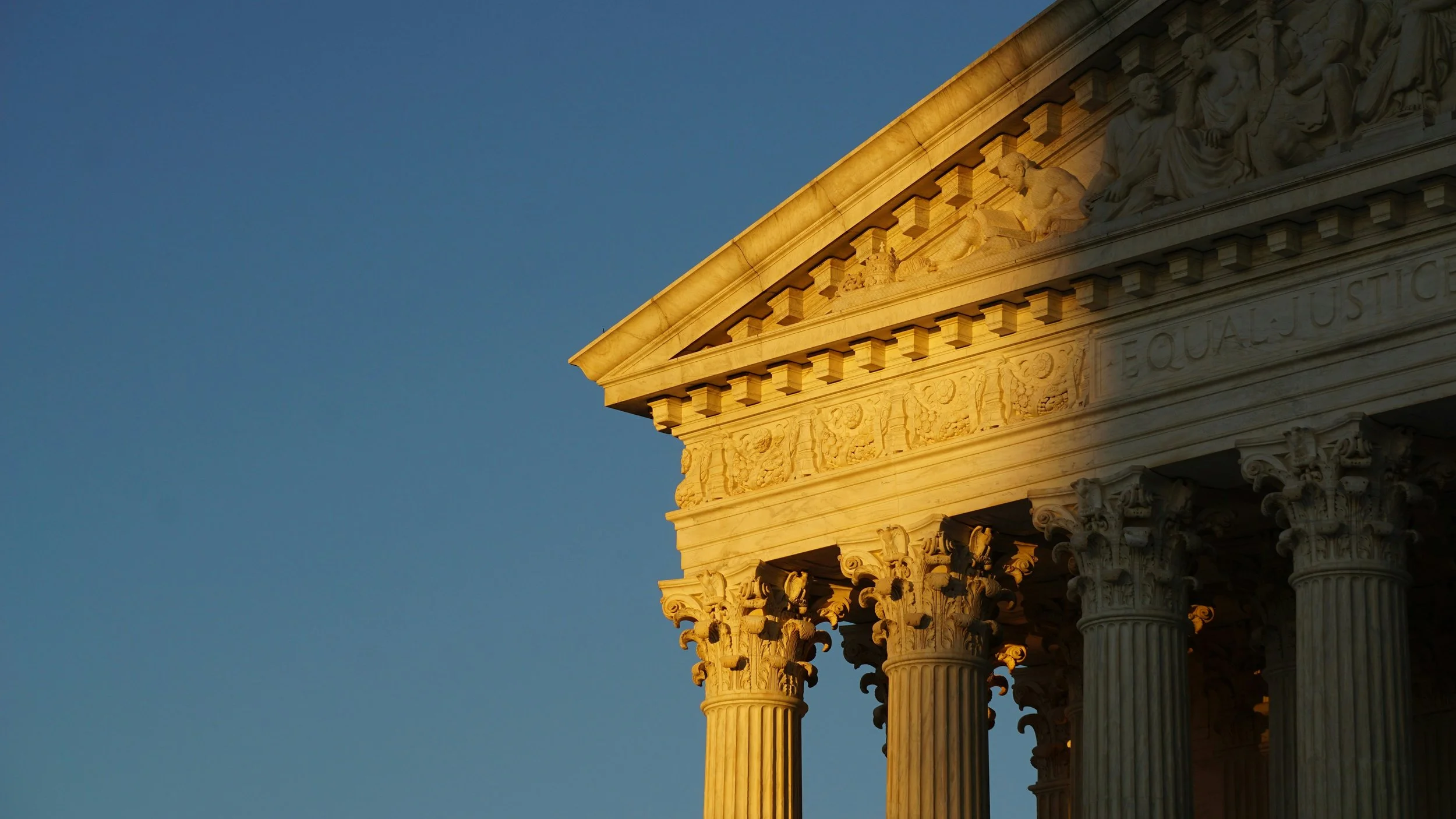
People make terrible decisions all of the time. I’ve written about terrible decisions before - in areas like betting markets, crypto, using up/down votes to determine truth. [1] But these seem like lower stakes relative to the United States Supreme Court making some awful decisions.
In this newsletter, we’re going to focus on a few truly terrible judicial decisions, but also with a little hope that these aren’t permanent – we can always work to make sure these decisions are reversed and relegated to become bad historical footnotes. Let’s take a look at three of the worst in U.S. Supreme Court history.
Dred Scott v. Sanford
“[T]he right of property in a slave is distinctly and expressly affirmed in the Constitution.”
The following is an abridged overview of the Dred Scott decision from the National Archives: [3]
In this ruling, the U.S. Supreme Court stated that enslaved people were not citizens of the United States and, therefore, could not expect any protection from the federal government or the courts. The opinion also stated that Congress had no authority to ban slavery from a Federal territory.
In 1846, an enslaved Black man named Dred Scott and his wife, Harriet, sued for their freedom in St. Louis Circuit Court. They claimed that they were free due to their residence in a free territory where slavery was prohibited.
…
On March 6, 1857, Chief Justice Roger B. Taney read the majority opinion of the Court, which stated that enslaved people were not citizens of the United States and, therefore, could not expect any protection from the federal government or the courts. The opinion also stated that Congress had no authority to ban slavery from a federal territory. This decision moved the nation a step closer to the Civil War.
The decision of Scott v. Sandford, considered by many legal scholars to be the worst ever rendered by the Supreme Court, was overturned by the 13th and 14th amendments to the Constitution, which abolished slavery and declared all persons born in the United States to be citizens of the United States.
Plessy v. Ferguson
Here also is an abridged overview of the Plessy decision, which legalized racial segregation after the Civil War, from the National Archives: [4][5]
The ruling in this Supreme Court case upheld a Louisiana state law that allowed for "equal but separate accommodations for the white and colored races."
During the era of Reconstruction, Black Americans’ political rights were affirmed by three constitutional amendments and numerous laws passed by Congress. Racial discrimination was attacked on a particularly broad front by the Civil Rights Act of 1875. This legislation made it a crime for an individual to deny “the full and equal enjoyment of any of the accommodations, advantages, facilities, and privileges of inns, public conveyances on land or water, theaters and other places of public amusement; subject only to the conditions and limitations established by law, and applicable alike to citizens of every race and color.”
In 1883, the Supreme Court struck down the 1875 act, ruling that the 14th Amendment did not give Congress authority to prevent discrimination by private individuals. Victims of racial discrimination were told to seek relief not from the federal government, but from the states. At the same time, state governments were passing legislation that codified inequality between the races. Laws requiring the establishment of separate schools for children of each race were most common; however, segregation was soon extended to most public and semi-public facilities through “Jim Crow” laws.
…
In 1896, the Supreme Court issued its decision in Plessy v. Ferguson, [holding that Jim Crow laws that legally separate white and black Americans were constitutional, but] it was not until the Supreme Court’s decision in Brown v. Board of Education and congressional civil rights acts of the 1950s and 1960s that systematic segregation under state law was ended. In the wake of those Federal actions, many states amended or rewrote their state constitutions to conform with the spirit of the 14th Amendment. For Homer Plessy, the remedies came too late.
Trump v. United States
This 2024 decision provided Donald Trump as a former president immunity from criminal prosecution for actions he took while President to conspire to overturn the 2020 presidential election – an election that he lost. [6]. Here are the initial paragraphs from the Court’s opinion describing the case: [7]
A federal grand jury indicted former President Donald J. Trump on four counts for conduct that occurred during his Presidency following the November 2020 election. The indictment alleged that after losing that election, Trump conspired to overturn it by spreading knowingly false claims of election fraud to obstruct the collecting, counting, and certifying of the election results. Trump moved to dismiss the indictment based on Presidential immunity, arguing that a President has absolute immunity from criminal prosecution for actions performed within the outer perimeter of his official responsibilities, and that the indictment’s allegations fell within the core of his official duties. The District Court denied Trump’s motion to dismiss, holding that former Presidents do not possess federal criminal immunity for any acts. The D.C. Circuit affirmed. Both the District Court and the D.C. Circuit declined to decide whether the indicted conduct involved official acts.
Held: Under our constitutional structure of separated powers, the nature of Presidential power entitles a former President to absolute immunity from criminal prosecution for actions within his conclusive and preclusive constitutional authority. And he is entitled to at least presumptive immunity from prosecution for all his official acts. There is no immunity for unofficial acts.
The key with these dividing lines between absolute immunity, presumptive immunity, and no immunity is what is “within his conclusive and preclusive constitutional authority” and who makes these decisions.
The two key dissents from Justices Sonia Sotomayor and Ketanji Brown Jackson are powerful, prescient, and best characterize the impacts on our constitutional system of government
Sotomayor Dissent
Today’s decision to grant former Presidents criminal immunity reshapes the institution of the Presidency. It makes a mockery of the principle, foundational to our Constitution and system of Government, that no man is above the law. Relying on little more than its own misguided wisdom about the need for “bold and unhesitating action” by the President, the Court gives former President Trump all the immunity he asked for and more. Because our Constitution does not shield a former President from answering for criminal and treasonous acts, I dissent.
….
Looking beyond the fate of this particular prosecution, the long-term consequences of today’s decision are stark. The Court effectively creates a law-free zone around the President, upsetting the status quo that has existed since the Founding. This new official-acts immunity now “lies about like a loaded weapon” for any President that wishes to place his own interests, his own political survival, or his own financial gain, above the interests of the Nation. Korematsu v. United States, 323 U. S. 214, 246 (1944) (Jackson,J., dissenting). The President of the United States is the most powerful person in the country, and possibly the world. When he uses his official powers in any way, under the majority’s reasoning, he now will be insulated from criminal prosecution. Orders the Navy’s Seal Team 6 to assassinate a political rival? Immune. Organizes a military coup to hold onto power? Immune. Takes a bribe in exchange for a pardon? Immune. Immune, immune, immune.
Let the President violate the law, let him exploit the trappings of his office for personal gain, let him use his official power for evil ends. Because if he knew that he may one day face liability for breaking the law, he might not be as bold and fearless as we would like him to be. That is the majority’s message today.
Even if these nightmare scenarios never play out, and I pray they never do, the damage has been done. The relationship between the President and the people he serves has shifted irrevocably. In every use of official power, the President is now a king above the law.
The majority’s single-minded fixation on the President’s need for boldness and dispatch ignores the countervailing need for accountability and restraint. The Framers were not so single-minded. In the Federalist Papers, after “endeavor[ing] to show” that the Executive designed by the Constitution “combines . . . all the requisites to energy,” Alexander Hamilton asked a separate, equally important question: “Does it also combine the requisites to safety, in a republican sense, a due dependence on the people, a due responsibility?” The Federalist No. 77, p. 507 (J. Harvard Library ed. 2009). The answer then was yes, based in part upon the President’s vulnerability to “prosecution in the common course of law.” The answer after today is no.
Never in the history of our Republic has a President had reason to believe that he would be immune from criminal prosecution if he used the trappings of his office to violate the criminal law. Moving forward, however, all former Presidents will be cloaked in such immunity. If the occupant of that office misuses official power for personal gain, the criminal law that the rest of us must abide will not provide a backstop.
With fear for our democracy, I dissent.
Jackson Dissent
JUSTICE SOTOMAYOR has thoroughly addressed the Court’s flawed reasoning and conclusion as a matter of history, tradition, law, and logic. I agree with every word of her powerful dissent. I write separately to explain, as succinctly as I can, the theoretical nuts and bolts of what, exactly, the majority has done today to alter the paradigm of accountability for Presidents of the United States. I also address what that paradigm shift means for our Nation moving forward.
…
The majority of my colleagues seems to have put their trust in our Court’s ability to prevent Presidents from becoming Kings through case-by-case application of the indeterminate standards of their new Presidential accountability paradigm. I fear that they are wrong. But, for all our sakes, I hope that they are right.
In the meantime, because the risks (and power) the Court has now assumed are intolerable, unwarranted, and plainly antithetical to bedrock constitutional norms, I dissent.
Also, normally dissents are done so “respectfully” (e.g., “I respectfully dissent.”); the absence of this one word from each of their dissents rightly speaks volumes.
So vexed was the majority by the dissenting opinions, they felt compelled to counter Sotomayor’s dissent nine times and Jackson’s dissent three times in their own opinion and concurrences.
Former U.S. Supreme Court Justice Robert Jackson is referenced heavily in the Trump v United States decision, mentioned ten times in the opinion and concurrences, focusing on Jackson’s use of the phrase “conclusive and preclusive” executive authority in his concurrence in Youngstown Sheet & Tube Co. v. Sawyer. [8]
It’s worthy to note that Justice Robert Jackson had more to say about the Supreme Court and its decision making after Youngstown.
Jackson’s dissent in Korematsu v. United States - a decision by the Supreme Court that upheld the exclusion of people of Japanese descent from the West Coast Military Area during World War II, an exclusion that led to the internment of Japanese Americans. – seems particularly relevant to Americans and Californians today: [9][10]
Korematsu was born on our soil, of parents born in Japan. The Constitution makes him a citizen of the United States by nativity, and a citizen of California by residence. No claim is made that he is not loyal to this country. There is no suggestion that apart from the matter involved here, he is not law-abiding and well- disposed. Korematsu, however, has been convicted of an act not commonly a crime. It consists merely of being present in the state whereof he is a citizen, near the place where he was born, and where all his life he has lived.
Nine years later, Justice Robert Jackson reflected on the perception of the Supreme Court’s infallibility in his concurrence in Brown v Allen, a landmark case regarding the right of habeus corpus in state convictions: [11]
“There is no doubt that if there were a super-Supreme Court, a substantial proportion of our reversals of state courts would also be reversed. We are not final because we are infallible, but we are infallible only because we are final.”
Both Justices Jackson – whether we’ve turned the President into a king and on the Supreme Court’s actual fallibility – provide us guidance and hope that these terrible decisions can be remedied.
Yes, Virginia, Racism Still Exists
Dred Scott and Plessy showed how racism has played a strong role in defining American history. Unfortunately, we are still dealing with it, and it’s coming straight from the President himself. From CNN reporting: [12]
President Donald Trump refused to apologize Friday after posting and then deleting a racist video depicting former President Barack Obama and former first lady Michelle Obama as apes in a jungle, insisting he hadn’t seen the final frames containing the offensive content and blaming a staffer for the mistake.
I won’t post the video here, but here is a link to get more background on the racist video President Trump posted, presenting former President Barack Obama and former First Lady Michelle Obama as apes – a centuries-old racist trope.
Narratives
The book I’m reading or movie I’m watching
2026 Milan Cortina Olympics (now streaming on NBC and Peacock)
We love the Olympics and have attended twice (2012 London and 2024 Paris). We can’t wait for 2028 when the Olympics come to Los Angeles.

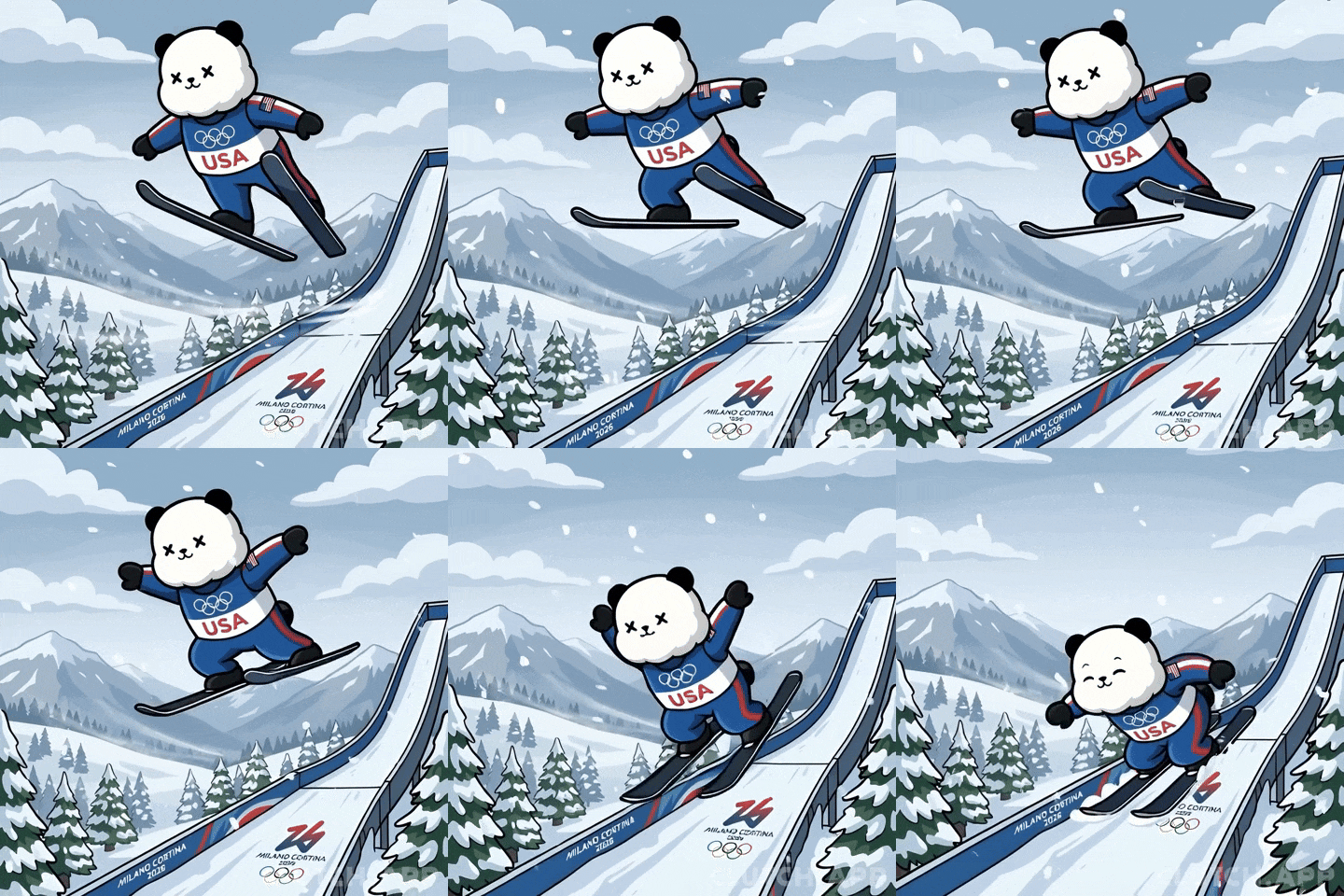
GIF Game
Notes and Sources
[1] Mic Farris, “Terrible Decisions,” December 14, 2025, https://www.micfarris.com/articles/terrible-decisions
[2] Dred Scott v. Sandford, 60 U.S. 393 (1856), https://perma.cc/LF3Q-EJA8
[3] “Dred Scott v. Sandford (1857),” National Archives, Milestone Documents, retrieved February 8, 2026, https://www.archives.gov/milestone-documents/dred-scott-v-sandford
[4] “Plessy v. Ferguson (1896),” National Archives, Milestone Documents, retrieved February 8, 2026, https://www.archives.gov/milestone-documents/plessy-v-ferguson
[5] Plessy v. Ferguson, 163 U.S. 537 (1896), https://www.loc.gov/resource/usrep.usrep163537/
[6] United States v. Trump, 1:23-cr-00257, (D.D.C.), Document 1, August 1, 2023, https://www.justice.gov/storage/US_v_Trump_23_cr_257.pdf
[7] Trump v. United States, 603 U.S. 593 (2024), https://www.supremecourt.gov/opinions/23pdf/23-939_e2pg.pdf
[8] Youngstown Sheet & Tube Co. v. Sawyer, 343 U.S. 579 (1952), https://tile.loc.gov/storage-services/service/ll/usrep/usrep343/usrep343579/usrep343579.pdf
[9] Korematsu v. United States, 323 U.S. 214 (1944), https://tile.loc.gov/storage-services/service/ll/usrep/usrep323/usrep323214/usrep323214.pdf
[10] “Korematsu v. United States,” Wikipedia, retrieved February 8, 2026, https://en.wikipedia.org/wiki/Korematsu_v._United_States
[11] Brown v. Allen, 344 U.S. 443 (1953), https://tile.loc.gov/storage-services/service/ll/usrep/usrep344/usrep344443/usrep344443.pdf
[12] Kevin Liptak, Adam Cancryn, Alayna Treene, Alejandra Jaramillo, and Betsy Klein, “Trump won’t apologize for sharing since-deleted racist video depicting Obamas as apes on Truth Social,” CNN, February 6, 2026, https://www.cnn.com/2026/02/06/politics/donald-trump-obamas-apes-truth-social
Decisions with Mic Farris
Seek Truth. Honor Differences.