Truth Seeking
Better decisions are made when we honor and protect those who seek and surface the truth.
If you’d like these posts delivered directly to you, subscribe to the Decisions newsletter now!
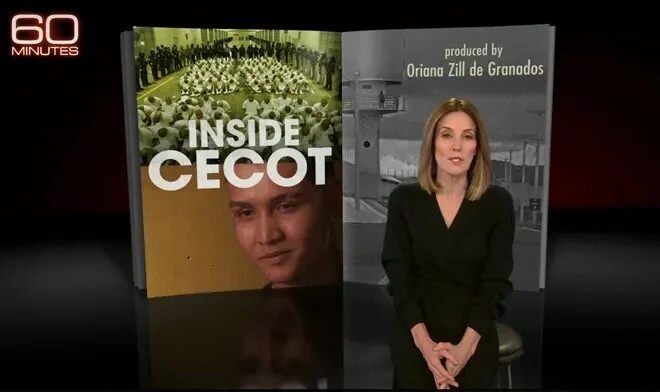
Sharyn Alfonsi's first journalism lesson came from a bowl of soup.
She was a high school waitress near Tysons Corner when a customer asked about the soup of the day. She told him it wasn't actually from today - it had been sitting under a heat lamp for days, kept alive by what she called "pure corporate willpower." Her manager said she wasn't being a team player, so she was fired.
She went on to become one of the most decorated investigative journalists in the country, working for CBS’s “60 Minutes.” Last month she accepted the Ridenhour Prize for Courage at the National Press Club, and that soup story was how she opened.
The room laughed. But she wasn't telling it as a warm-up. She was naming something she's watched harden into institutional policy across American media: the shift from “is this true” to “is this good for business.”
When her team's CECOT report was pulled in December 2025, she refused to change a factually correct story. She knew viewers would compare the bootlegged Canadian version to whatever CBS aired, and she knew they'd see the difference. Anonymous sources called her difficult. Someone even swatted her home to send a message.
What she described at the podium wasn't a rogue editorial decision or a single executive making a bad call. It was a contagion - her word - spreading through newsrooms that have decided the cost of the truth is too high. Executives afraid of offending power, of losing access, of lawsuits that have no merit but cost money to fight.
The audience, she said, already knows. They can smell the difference between a sanitized story and an unflinching one. The ratings don't lie, even when the editorial decisions do.
I think about this in contexts beyond journalism.
Every organization has a version of the CECOT decision sitting somewhere in its recent history. The analysis that came back not telling the anticipated story and got quietly shelved. The forecast that contradicted what the executive had already told the board. The product data that nobody wanted to discuss in the room where the roadmap was being set. The planning recommendation that had the numbers behind it and lost anyway to a coalition that had the votes.
The mechanism is identical. The stakes are different, but the source of rot is the same: evidence loses to preference, and the people who carried the evidence learn what that cost them.
Alfonsi said something near the end of her speech to which I keep coming back. She said fear can paralyze you, or it can point you to exactly what needs to be protected.
Scientists do this. Investigators do it. Detectives, journalists, the good analyst who won't let the anomaly go - they're all in the same business. Finding the best available explanation for what the data are actually showing - finding the truth - even when the answer is inconvenient, even when it takes longer than the room has patience for.
Organizations that make better decisions over time share this - societies, too: they protect those people.
There is a fine line, Alfonsi said, between being a team player and being an accomplice.
Worth asking which side of that line your decision culture is standing on.
Notes and Sources
[1] Martin Holmes, “’60 Minutes’ Sharyn Alfonsi Talks CBS News ‘Dust-Up’ and ‘Corporate Meddling’,” TVInsider, May 1, 2026, https://www.tvinsider.com/1261541/60-minutes-sharyn-alfonsi-cbs-news-bari-weiss/
[2] Kara Swisher [@karaswisher], Threads, May 1, 2026, https://www.threads.com/@karaswisher/post/DXz-vdbAInk
[3] Brian Stelter, “‘60 Minutes’ is finally airing the shelved ‘Inside CECOT’ segment,” CNN, January 18, 2026, https://www.cnn.com/2026/01/18/media/cbs-60-minutes-inside-cecot-bari-weiss-exclusive
Decisions with Mic Farris
Seek Truth. Honor Differences.