Erasing History
Remembering, not erasing, our history leads us to make better decisions for our country. Worth remembering on this Memorial Day.
If you’d like these posts delivered directly to you, subscribe to the Decisions newsletter now!
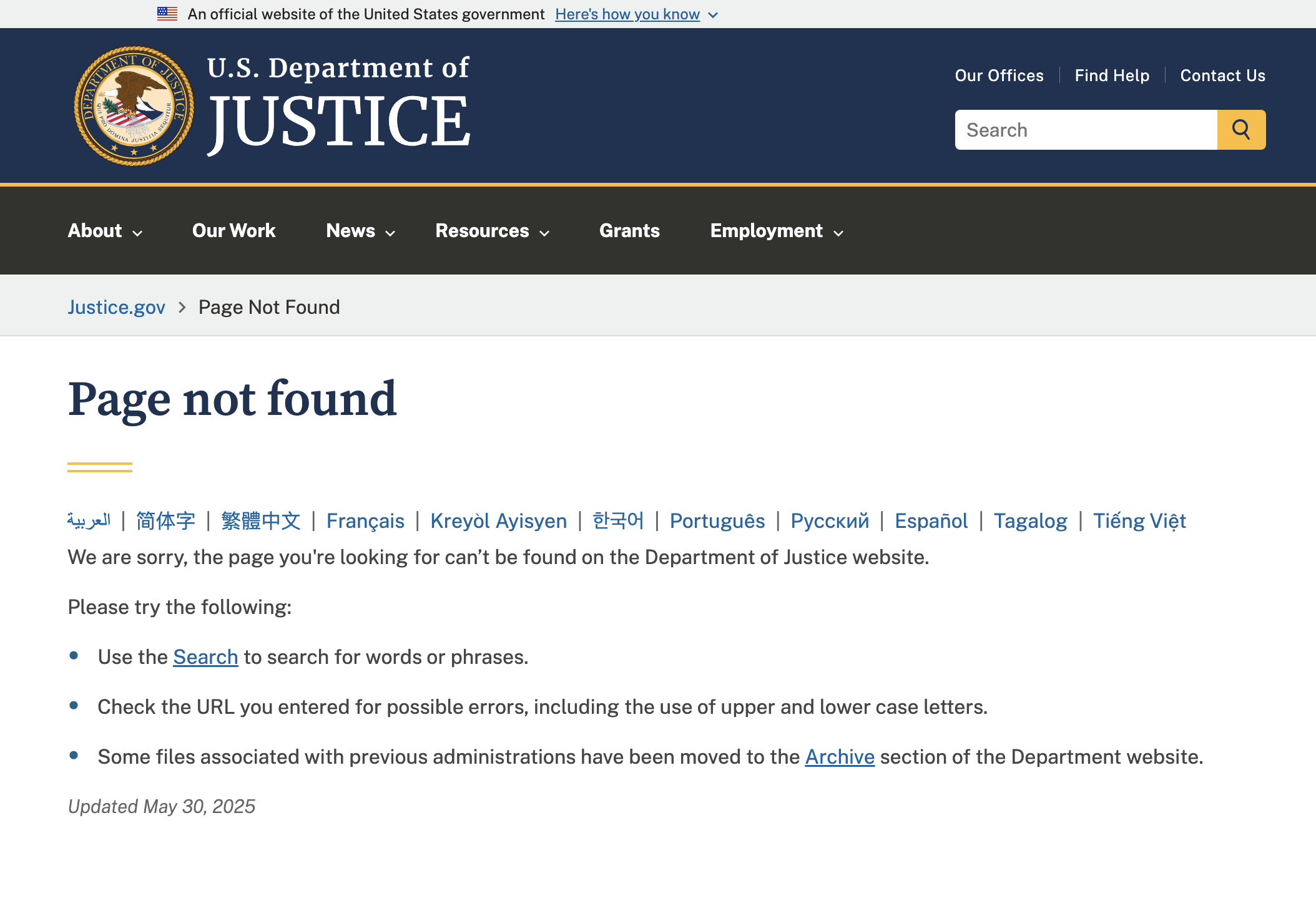
Website location of press release of charges against Christopher Michael Alberts, who was convicted and sentenced to seven years in prison after he was convicted of nine charges, including six felonies.
More on Alberts indictment can be found in my post here, including some text from the original press release:
“According to the government’s evidence, Alberts arrived at the Capitol on Jan. 6, 2021, wearing a body armor vest containing metal plates, a two-way radio with a throat mic, and a military backpack containing eight bungee cords, a flashlight, a ski mask, a meal-ready-to-eat kit, a first aid kit, military trousers, and a pocketknife. That day, Alberts carried with him, in a holster, a 9-millimeter pistol loaded with 12 rounds of ammunition and an additional bullet in the chamber. Alberts also wore a separate holster containing an additional 12 rounds of ammunition, which included “hollow point” bullets.”
On May 1, 1865, just weeks after the Civil War ended, formerly enslaved Black Americans returned to a racetrack in Charleston, South Carolina. During the war, it had served as a Confederate prison camp. Union soldiers who died there had been buried in a mass grave behind the grandstand. [1][2]
As historian Alexis Coe describes it, they came back with shovels, roses, and children carrying wreaths. They exhumed the bodies, reburied them properly, and enclosed the new cemetery they created with an arch reading: "Martyrs of the Race Course."
Historian David Blight, author of the Pulitzer Prize-winning biography of Frederick Douglass, has called it the first Memorial Day. [3]
It wasn't an official ceremony or proclaimed by generals or politicians. It was organized by people who understood what the war had been about, and who the dead were, and why they needed to be honored. Before anyone could let the story fade, remove slavery from the center of it, or rewrite the meaning of the sacrifice, the people who had survived the Confederacy told the truth in public.
That is how Memorial Day began with a refusal to let the record disappear.
In the following years, Gen. John Logan formalized the observance in 1868, calling for decoration of the graves of Union soldiers on May 30, and New York became the first state to make it a legal holiday in 1873. [4] After World War I, it expanded to honor those who died in all of America's wars. Congress set it permanently on the last Monday of May in 1971.
More than 150 years of honoring the fallen and insisting that what happened - and why - must not be forgotten.
We do this because history is not sentiment; it is the collection of events, facts, and rationales, giving us understanding about what happened in our past and why. And, most importantly, it is used to inform the decisions we make today.
If we forget our history, we may make the same mistakes others made in the past. If we choose to ignore our history, we’re valuing something else than making good decisions for our country.
With respect to Memorial Day, it is how we learn what sacrifice means, what threats to our Republic look like, and what it costs when people are willing to give everything to preserve what we have.
Good decision making requires accurate understanding of what happened and why. Erasing history doesn't make better decisions possible - it makes better decisions impossible.
Which leads us to the current efforts to erase history.
The Justice Department quietly deleted hundreds of press releases from its website detailing the charges against individuals who participated in the January 6, 2021, Capitol riot. The department described this as "stripping DOJ's website of partisan propaganda." [5] The same administration that mass-pardoned the rioters on its first day back in office, fired the prosecutors who tried the cases, and proposed a $1.8 billion fund to compensate those convicted [6] is now removing the documentation of what happened from the public record.
It is said that history doesn’t repeat itself, but it does rhyme.
The supporters of the Confederacy wanted to keep the institution of slavery alive in America. The supporters of the January 6 insurrection wanted to overthrow a free and fair election in our country.
Yet, after being stopped, supporters went on to erase the evidence of their misdeeds.
The Justice Department’s actions don’t comprise a legal argument or a factual dispute; nobody is claiming these events didn't occur. What is being claimed is that the public record of what occurred - the charges, the evidence, the documented conduct - should no longer be findable.
The tool being used is information control. Remove the data that complicates the narrative, and the narrative becomes easier to sustain.
Choosing not to know the truth makes bad decision making easier. It reduces the tension between what you want to believe and what the facts actually support. This is not an accident in many organizations and institutions; unfortunately, it’s a strategy.
This is that strategy, applied to January 6.
The people who organized the first Memorial Day in Charleston understood something that gets buried along with inconvenient facts: a society that controls what its citizens are allowed to know about their own history is not a society that will make good decisions going forward. The Lost Cause movement spent decades doing exactly that - softening, reframing, and ultimately enshrining a version of the Civil War that stripped slavery from the center of the story. It worked well enough to put Confederate monuments in courthouse squares and Confederate generals in textbooks as noble figures.
And we are still correcting for that error.
The question I keep coming back to is a simple one. Do we value every American's right to know the truth about what their government does in their name? Or do we assign greater value to the comfort of those in power - their ability to shape the record, control the story, and make the past easier to live with?
The people who carried wreaths to that racetrack in 1865 knew which one they were choosing. They marked the graves and told the truth.
On this Memorial Day, we honor those who gave their lives to protect this country. We should also ask honestly whether we are protecting what they died for - including the integrity of our own history, and the right of every American to know what actually happened.
Notes and Sources
[1] Alexis Coe, “Formerly Enslaved Americans Defined Memorial Day. Then the Lost Cause Rewrote It.,” Study Marry Kill, May 23, 2026, https://alexiscoe.substack.com/p/formerly-enslaved-americans-defined
[2] “The History of Memorial Day,” PBS, retrieved May 23, 2026, https://www.pbs.org/national-memorial-day-concert/memorial-day/history/
[3] “The First Decoration Day,” blog article (original written for Newark Star-Ledger, April 27, 2015, https://www.davidwblight.com/public-history/2015/4/27/the-first-decoration-day-newark-star-ledger
[4] “The History of Memorial Day,” PBS.
[5] Ryan J. Reilly and Kyla Guilfoil, “Justice Department deletes press releases on charges against Jan. 6 rioters,” NBC News, May 22, 2026 https://www.nbcnews.com/politics/justice-department/justice-department-deletes-press-releases-charges-jan-6-rioters-rcna346613
[6] Katherine Faulders, Peter Charalambous, and Alexander Mallin, “Trump administration to create $1.776B 'Truth and Justice Commission' to compensate allies: Sources,” ABC News, May 16, 2026, https://abcnews.com/US/trump-administration-create-1776b-truth-justice-commission-compensate/story?id=133005480
Decisions with Mic Farris
Seek Truth. Honor Differences.