Shadow Decision Making
In 2016, the Supreme Court created a “shadow docket” for making its decisions. What it did was create a decision environment for outcome-based decision making, but in the shadows.
If you’d like these posts delivered directly to you, subscribe to the Decisions newsletter now!
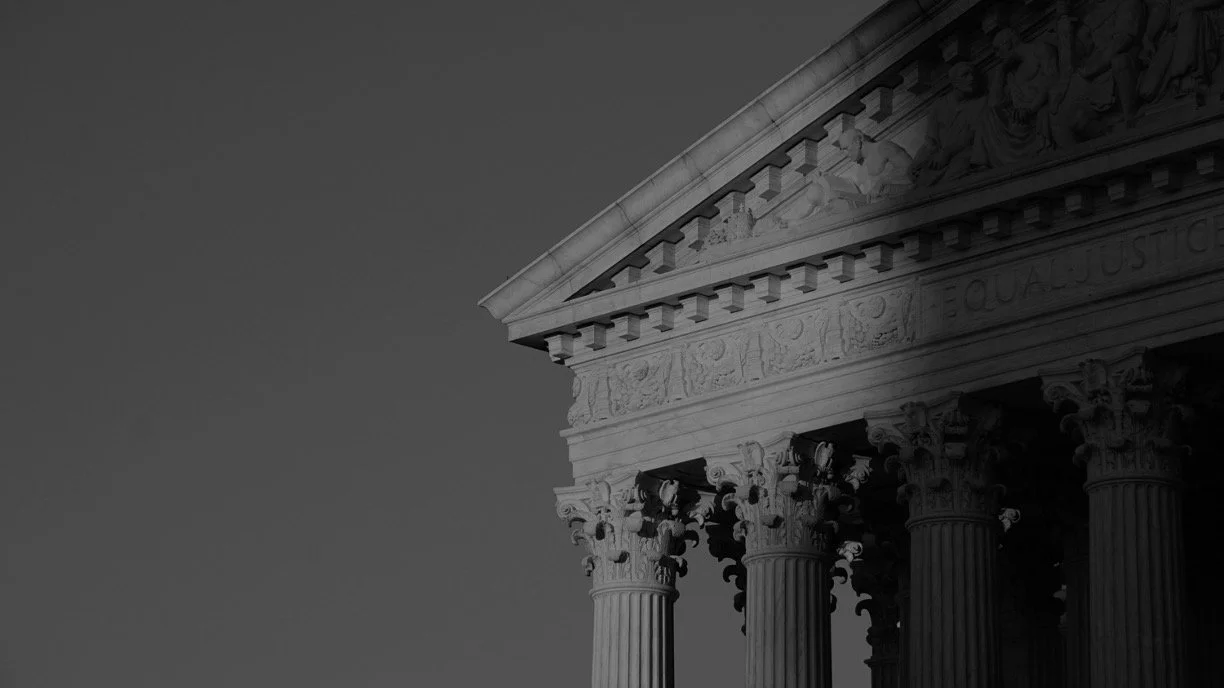
The Shadow Docket Is a Decision Culture Problem
The New York Times published a remarkable piece this week. [1] Secret memos - internal correspondence among the justices themselves - reveal how the Supreme Court's so-called "shadow docket" came to be. [2] The memos show how the justices stumbled into a new way of conducting their work in major cases on presidential power, short-circuiting longstanding procedures meant to ensure careful consideration and reasoned opinions.
Where did this start? In February 2016, the Court used the shadow docket to halt President Barack Obama's Clean Power Plan [3] - the first time it had ever stayed a regulation before a lower court ruling. The order offered no word of reasoning. A 5-to-4 vote with no explanation. [4] Major national policy halted.
Before going further, I want to be precise about something: the Supreme Court does not actually make decisions; nine independent decision makers do. What we call a "ruling" is the emergent result of a majority of those nine independent decision makers reaching agreement. Each justice assesses the truth of the legal situation before them and weighs the consequences. That process is everything; the ruling is only as trustworthy as the process that produced it.
Which is exactly why the shadow docket is a decision culture problem, not merely a procedural one.
There is a distinction I keep returning to in my work: the difference between truth-based and outcome-based decision making. Truth-based means you start with the most accurate assessment of the situation, surface the genuine consequences of each possible decision, and then act. It’s based on making the best decision, not one that is pre-determined. This also needs to be done transparently, in a way that can be interrogated and challenged. Outcome-based means you know what you want to happen, and you use the machinery of decision making to get there.
That seems to be what happened with the shadow docket; as the memos confirm, a majority of the Supreme Court engaged in outcome-based decision making, which has now been institutionalized over the last decade at the highest level of the American judiciary.
Normally, the Court decides cases based on thorough briefing and arguments culminating in written decisions that clearly lay out the majority's reasoning, allowing the public to evaluate the Court's justifications and imposing discipline on the justices' decision making. That discipline is not bureaucratic overhead; it is the mechanism by which decision makers are held accountable to truth. Remove it, and there is no opinion to critique, no reasoning to challenge, no accountability to what was actually decided and why.
I have spent more than 25 years watching this pattern play out with executive teams, city councils, and planning commissions. The failure mode is identical across every form of human organization. When the environment stops requiring decision makers to show their work - to surface the truth they assessed and the consequences they weighed - decision quality degrades. Not because the individuals are bad people, but instead because the environment stopped requiring them to be accountable to anything other than the outcome they preferred.
The fix is structural: restore the requirement to reason publicly, and make truth-seeking the thing the institution protects - not the thing it quietly routes around. Serious proposals have been offered for Congress to exert its authority to reform the Supreme Court, either through constitutional amendment or legislation. [5] Here’s a brief example of this from Jennifer Ahearn of the Brennan Center for Justice: [6]
Congress also has the power to legislate an ethics code. It has done so for other judges, and has passed laws governing everything from financial disclosures to the oath justices swear. Samuel Alito has insisted, “No provision in the Constitution gives them the authority to regulate the Supreme Court—period.” But as Justice Elena Kagan found it necessary to reply, “It just can’t be that the court is the only institution that somehow is not subject to checks and balances from anybody else. We’re not imperial.”
The question for any organization is the same one I would ask of the Court:
When your most important decisions are made, is the process designed to surface the truth or to protect the outcome?
Notes and Sources
[1] Jodi Kantor and Adam Liptak, “The Inside Story of Five Days That Remade the Supreme Court,” New York Times, April 18, 2026, https://www.nytimes.com/2026/04/18/us/politics/supreme-court-shadow-docket.html?unlocked_article_code=1.b1A.kZKP.K9aE-lL0OFna&smid=url-share
[2] “Shadow Docket,” Wikipedia, retrieved April 18, 2026, https://en.wikipedia.org/wiki/Shadow_docket
[3] “Clean Power Plan,” Wikipedia, retrieved April 18, 2026, https://en.wikipedia.org/wiki/Clean_Power_Plan
[4] West Virginia, et al., Applicants v. Environmental Protection Agency, et al., Docket No. 15A773, 136 S.Ct. 1000 (2016), 194 L. Ed. 2d 17, https://www.supremecourt.gov/orders/courtorders/020916zr_21p3.pdf
[5] Joanna R. Lampe, “Congressional Control over the Supreme Court,” Report No. R47382, Congressional Research Service, December 6, 2023, https://www.congress.gov/crs-product/R47382
[6] Jennifer Ahearn, “The Supreme Court Is Not Imperial. Congress Can Set Term Limits,” Brennen Center for Justice, August 9, 2024, https://www.brennancenter.org/our-work/analysis-opinion/supreme-court-not-imperial-congress-can-set-term-limits
Decisions with Mic Farris
Seek Truth. Honor Differences.